Mia Rogersdotter Gran
I tidens løp
Exhibition
2021/2023
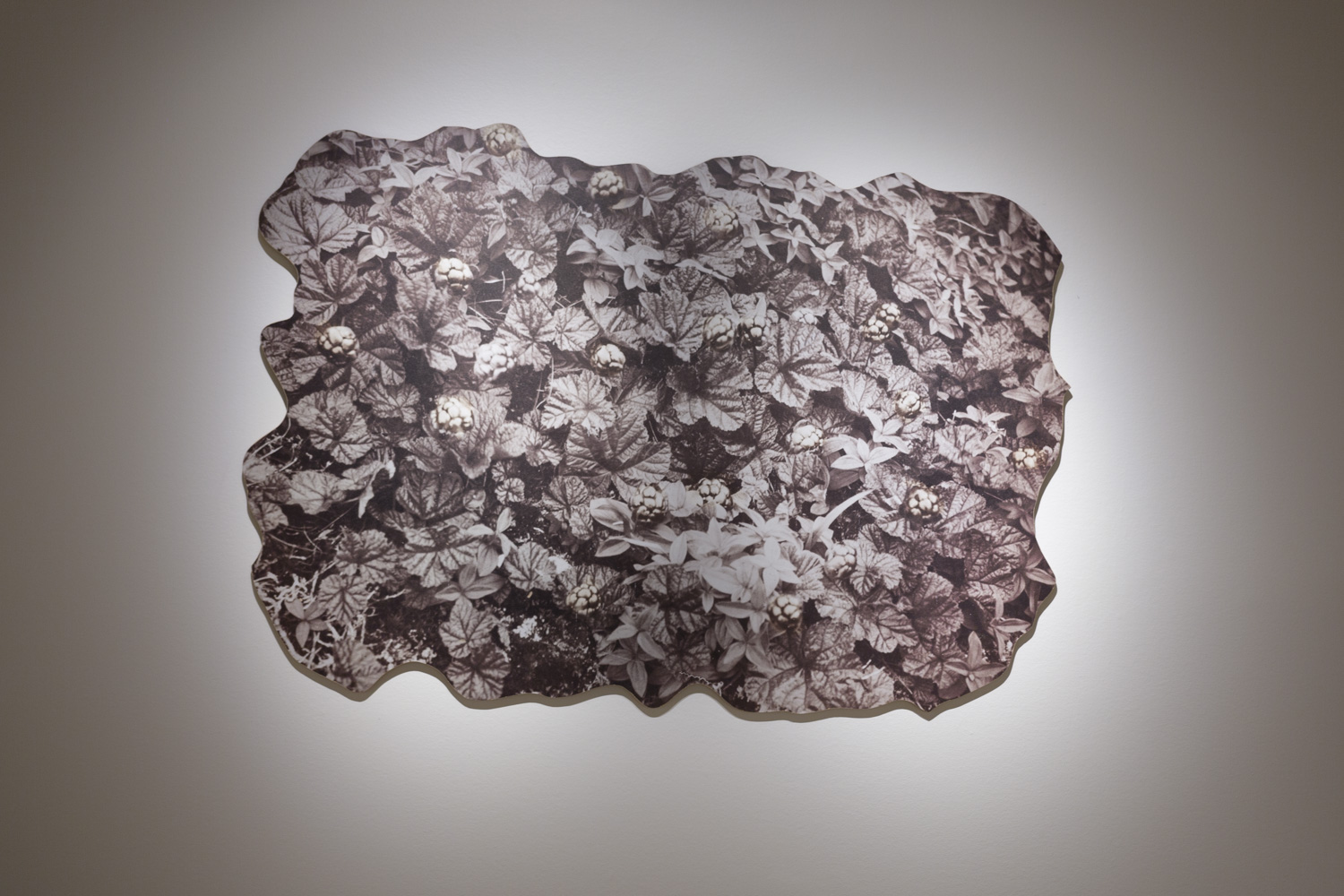
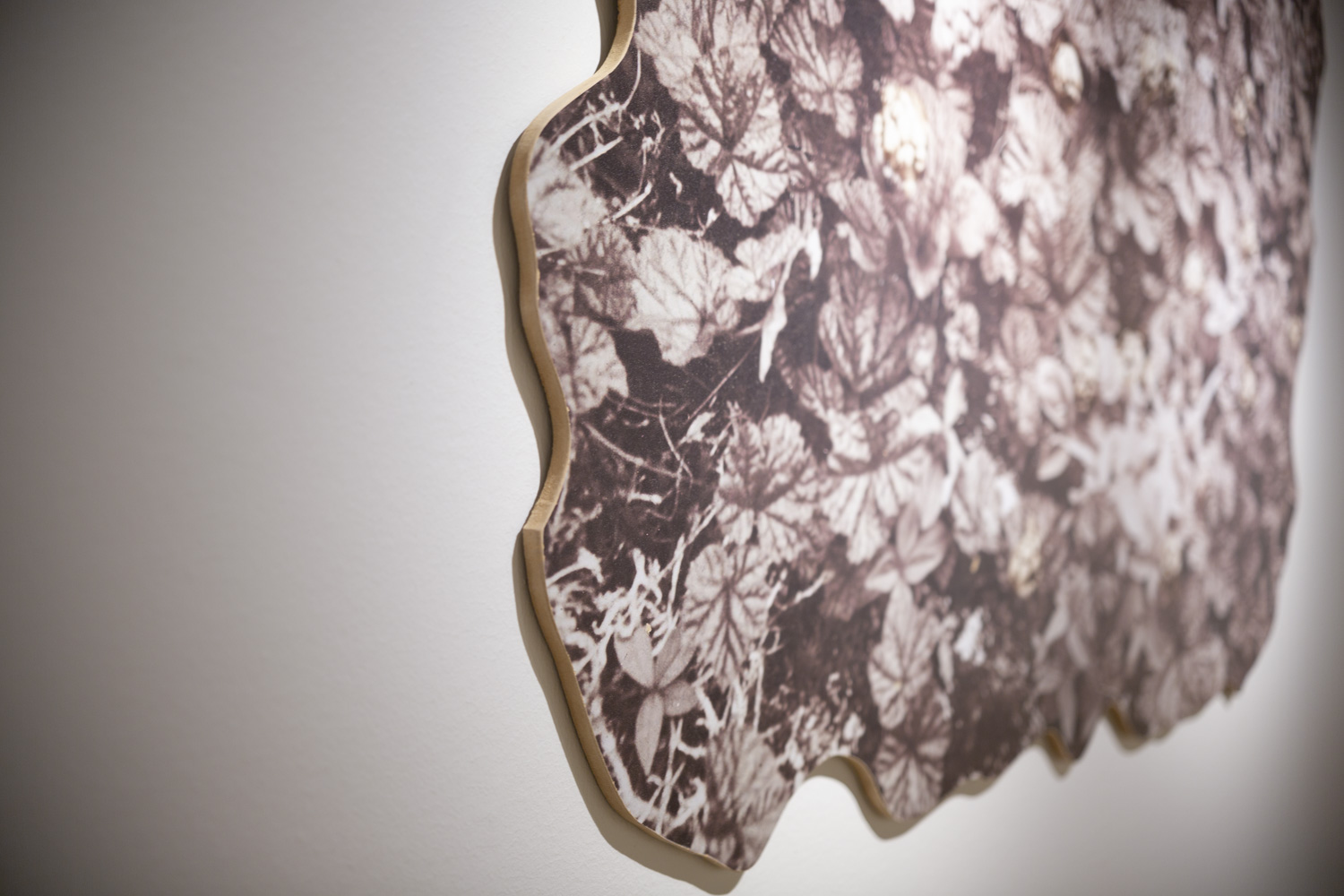
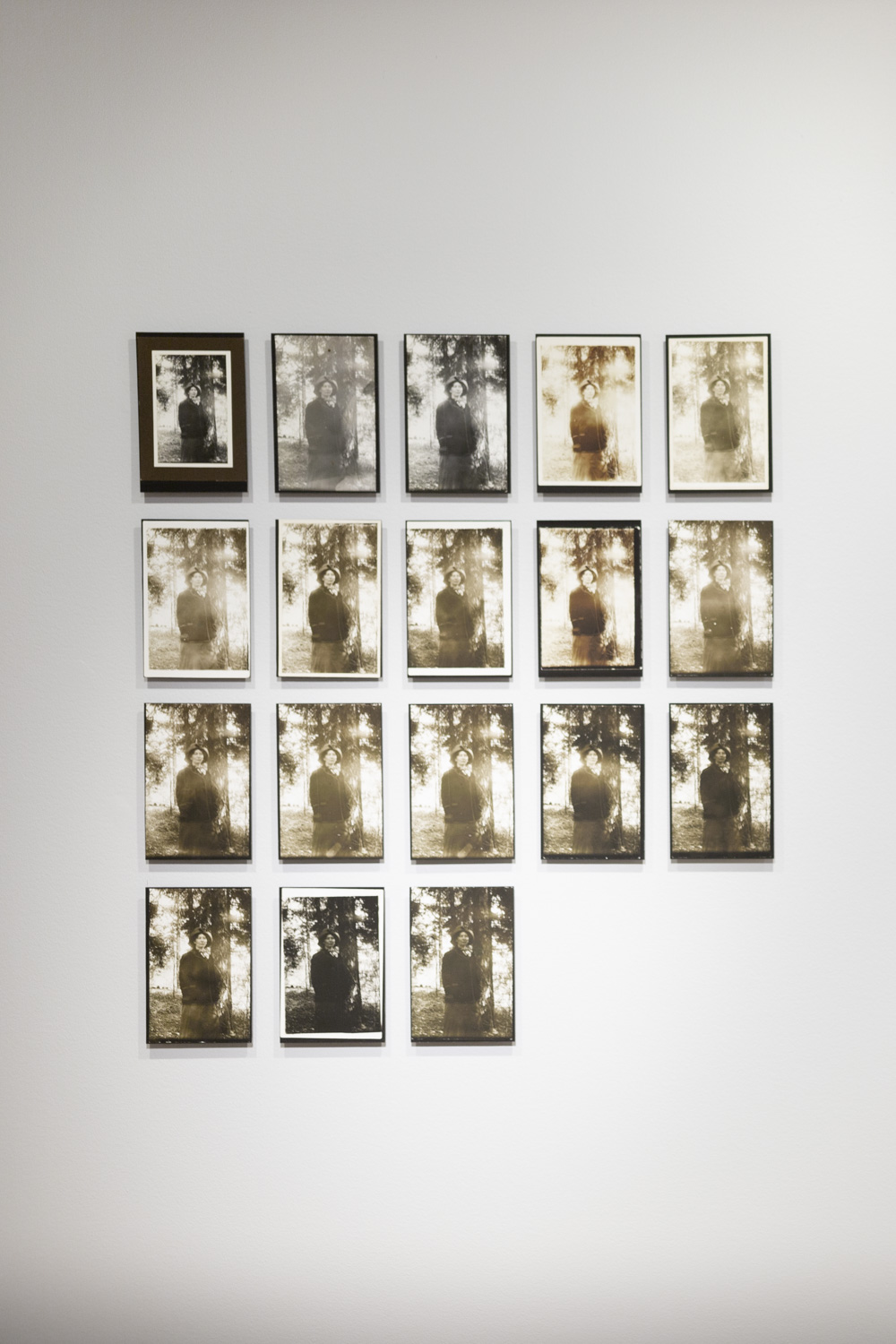
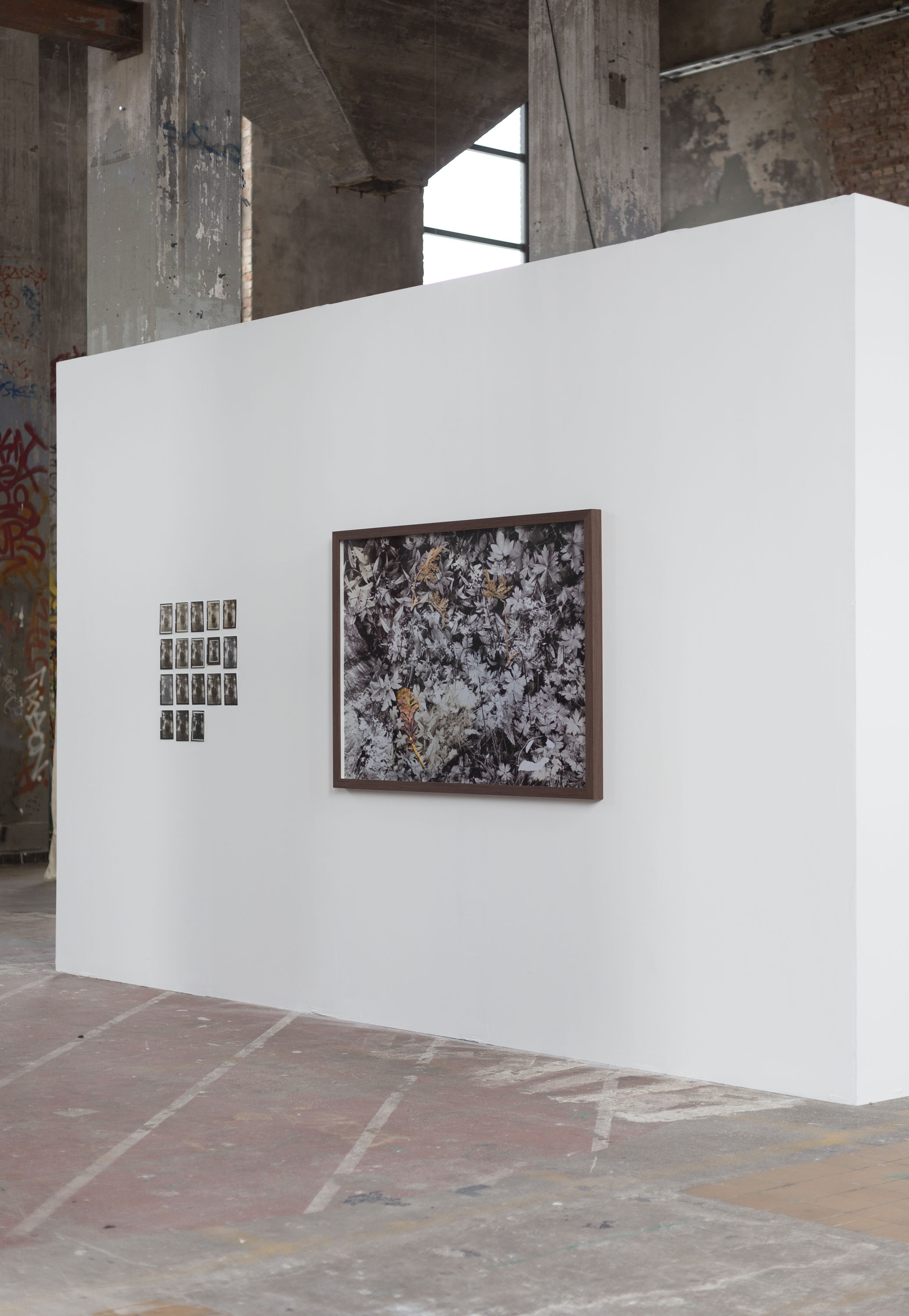

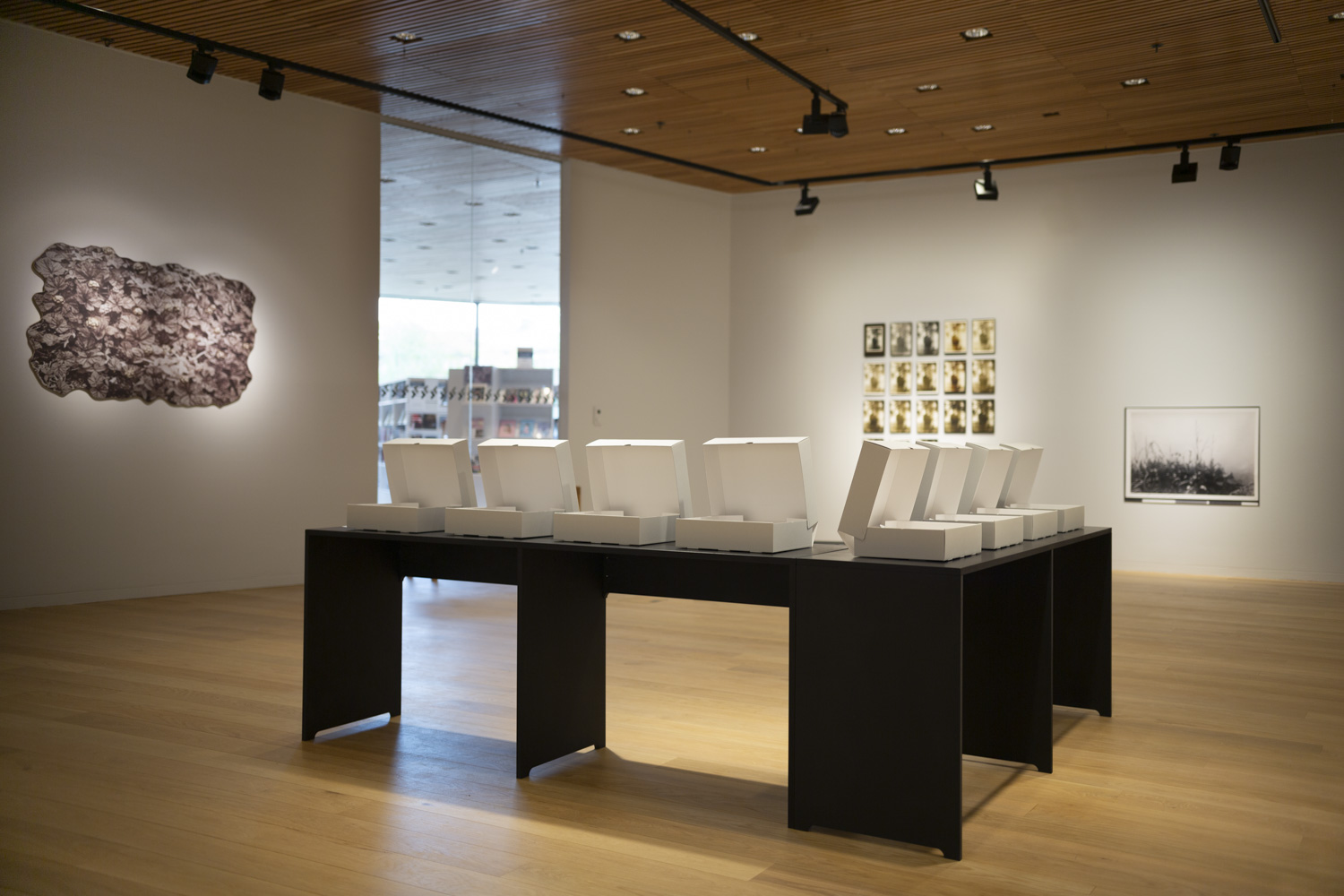
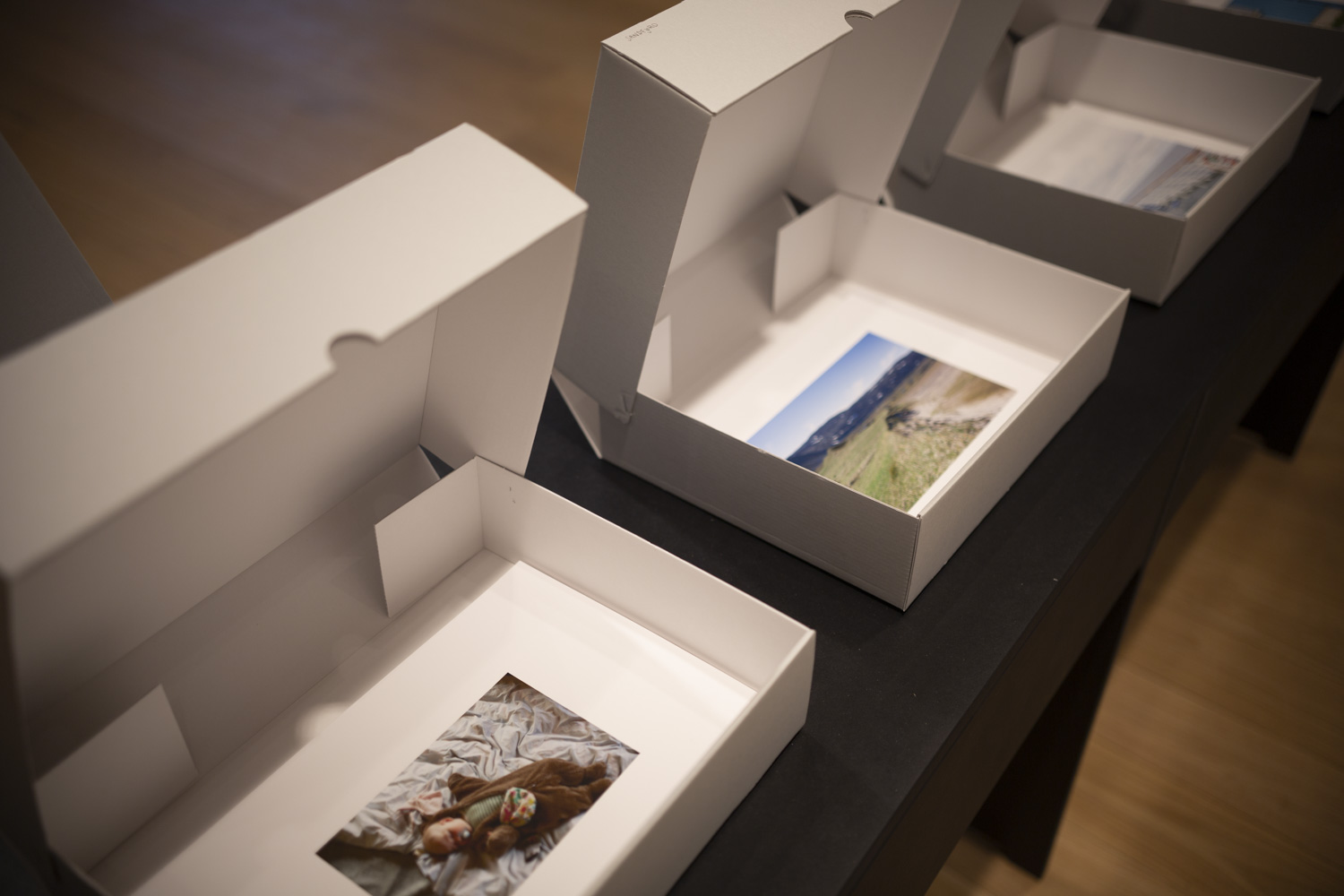
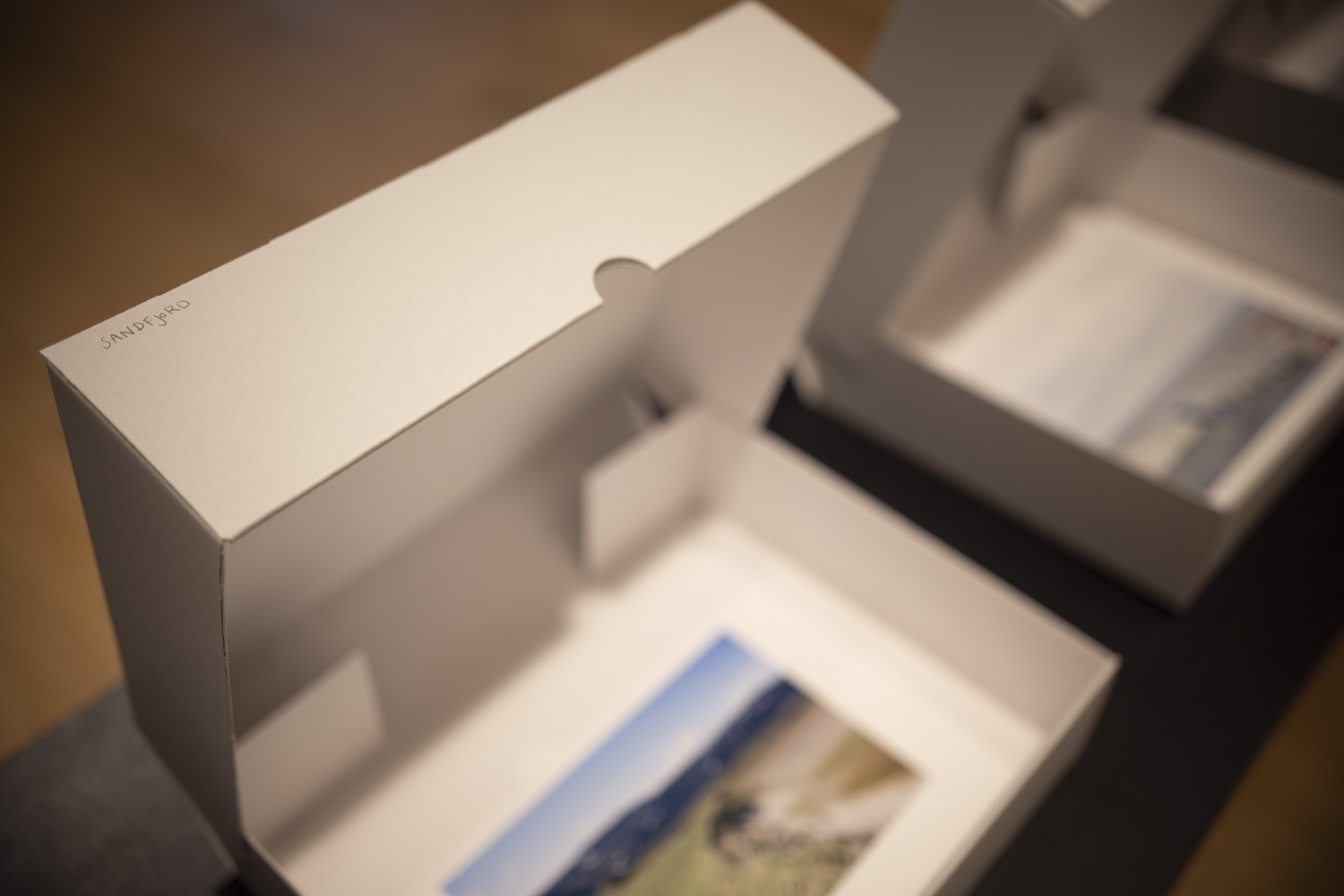


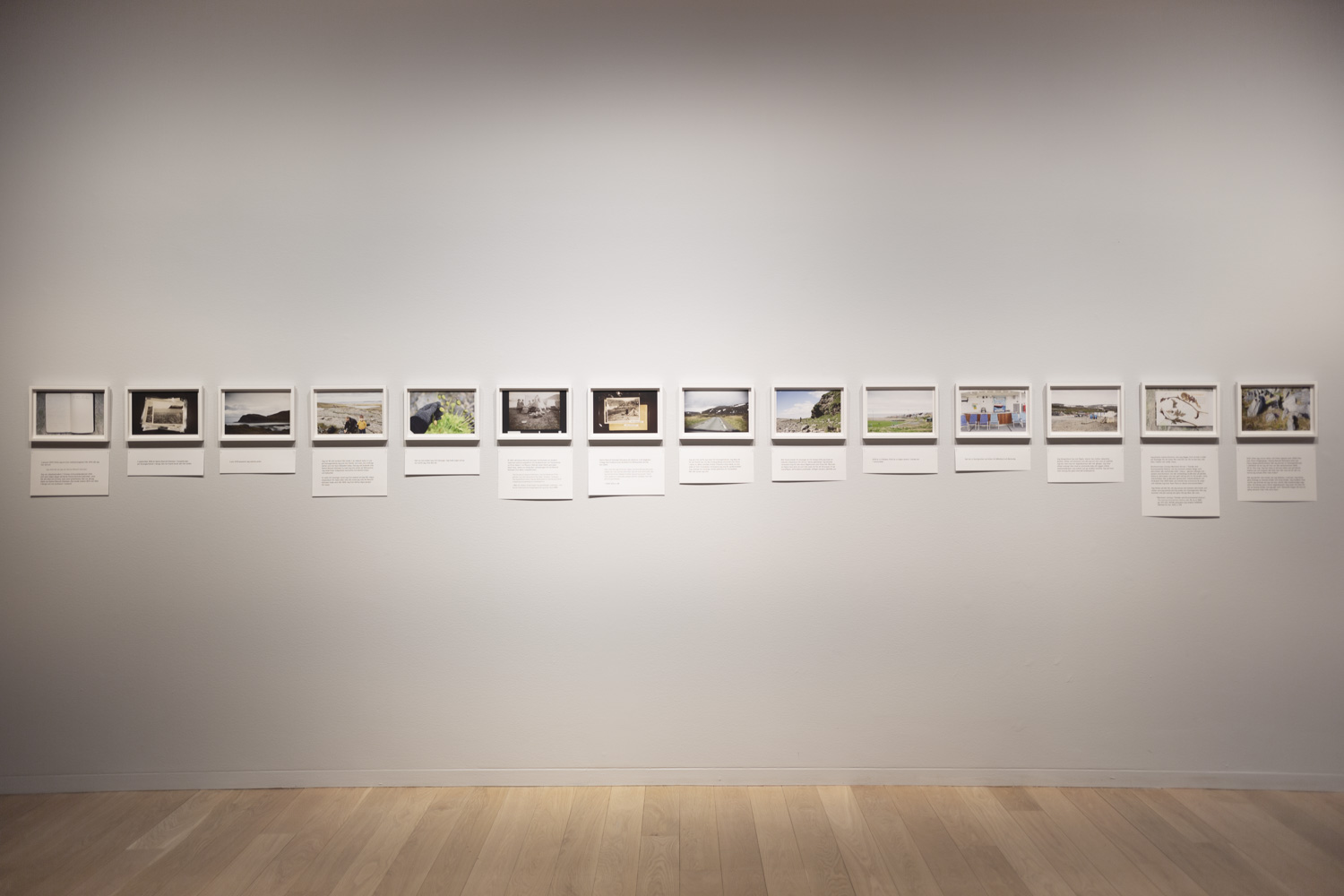
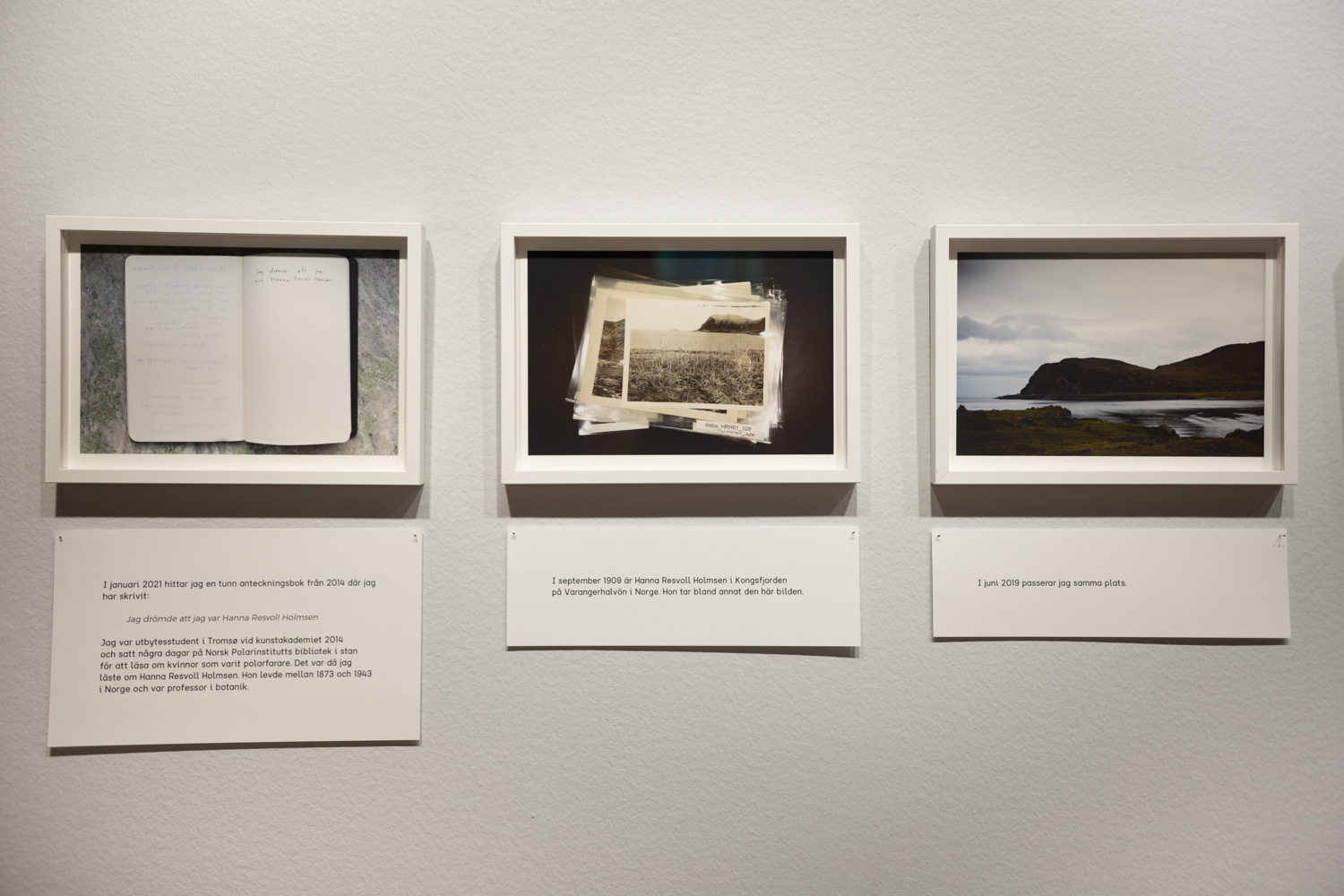

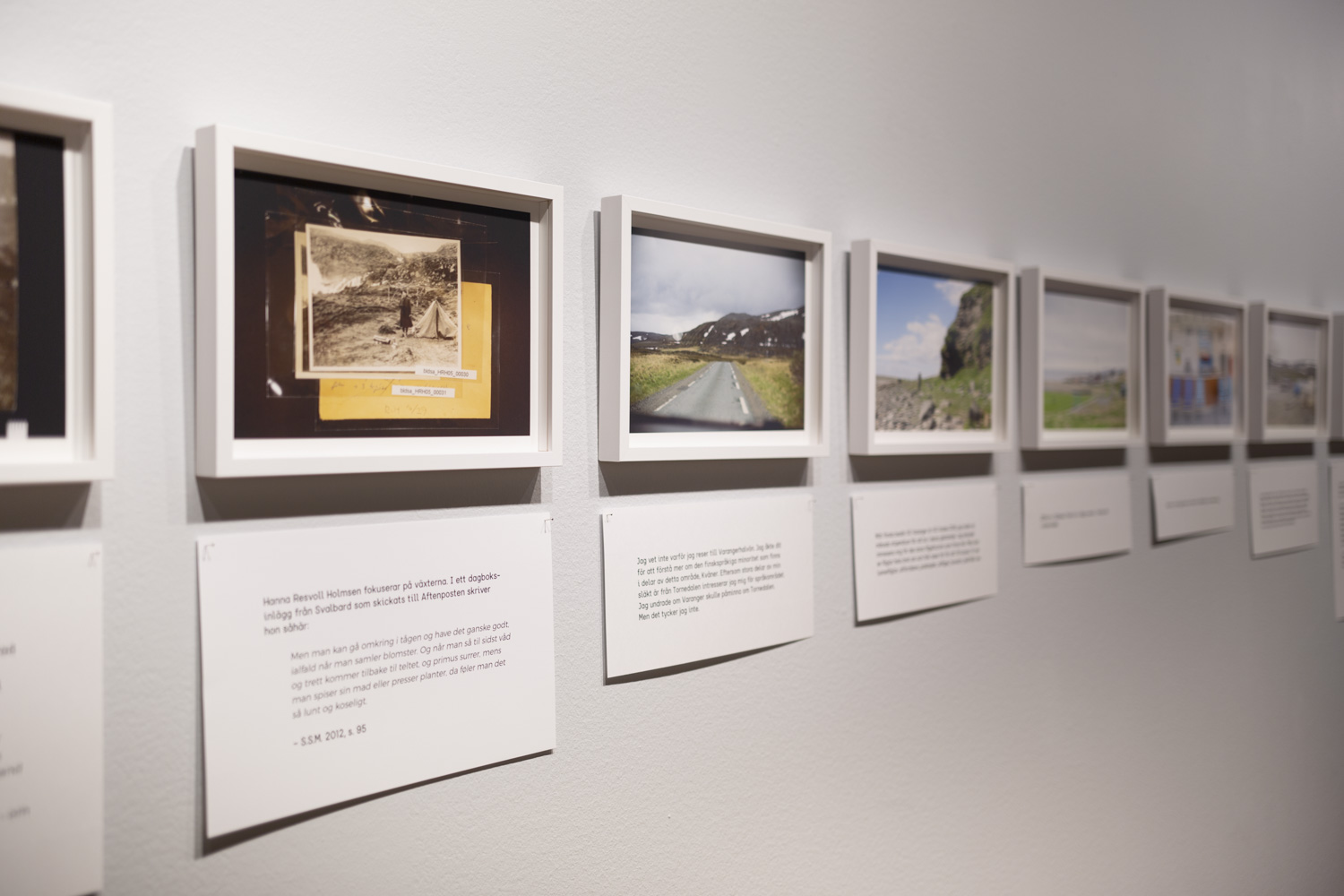

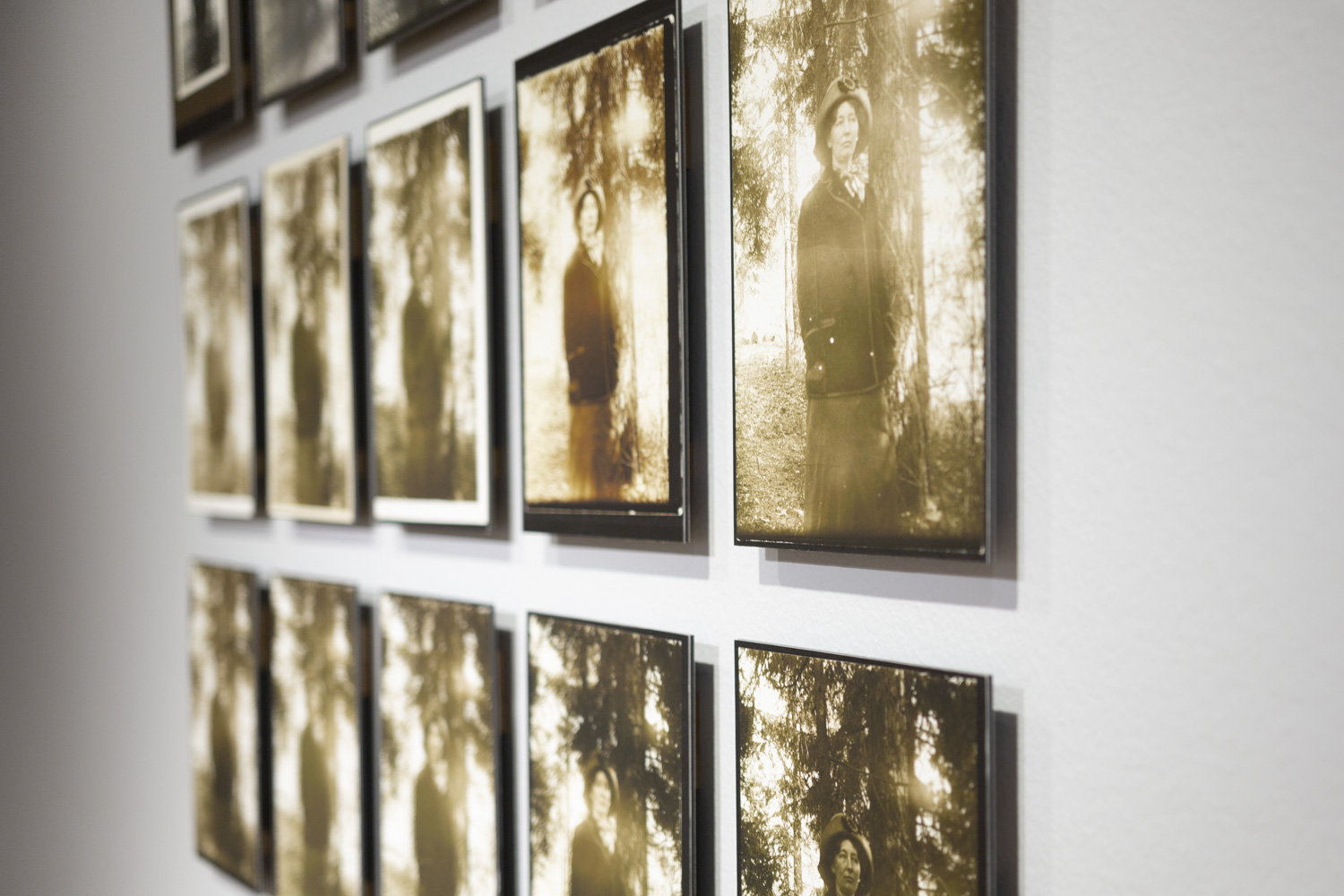

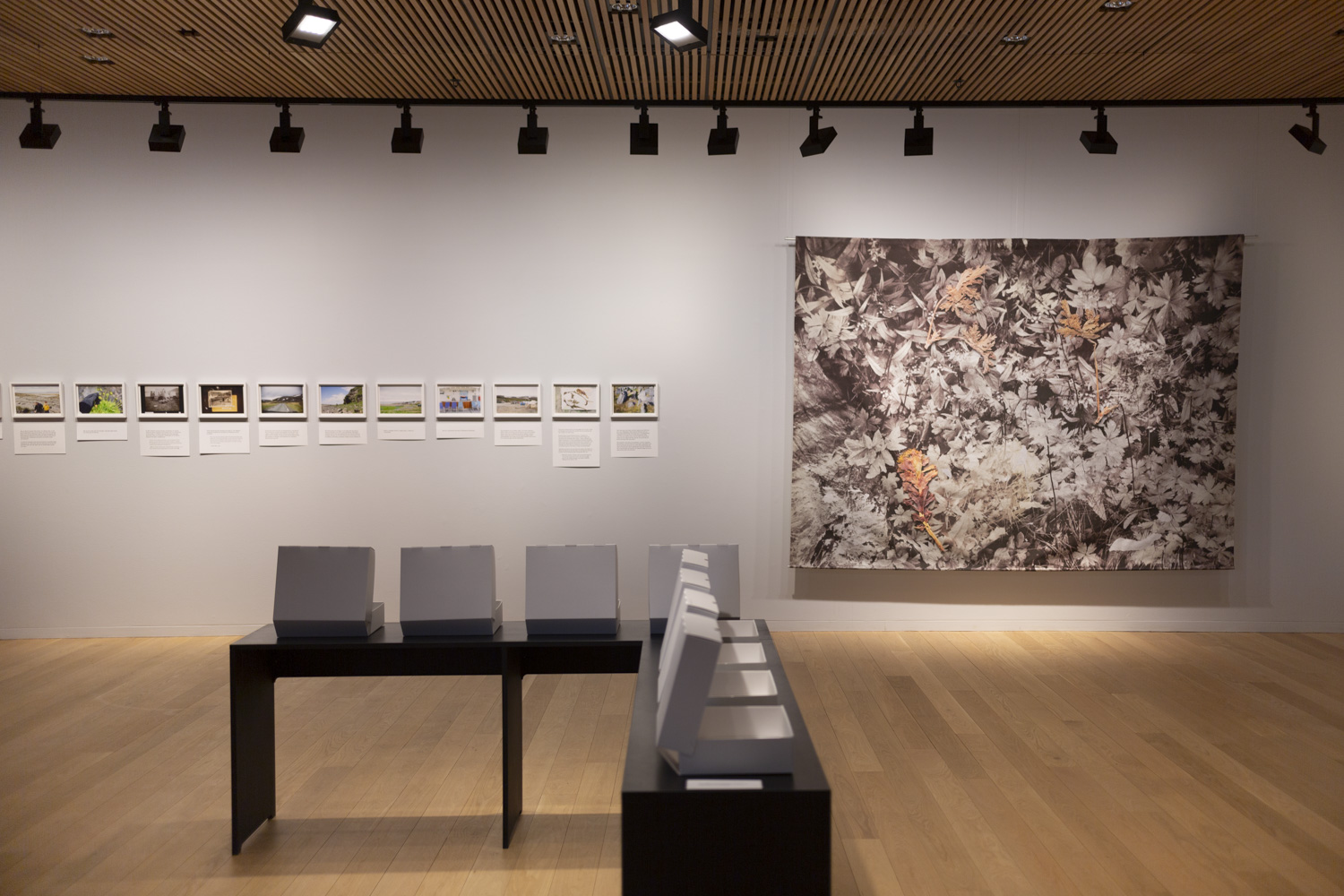
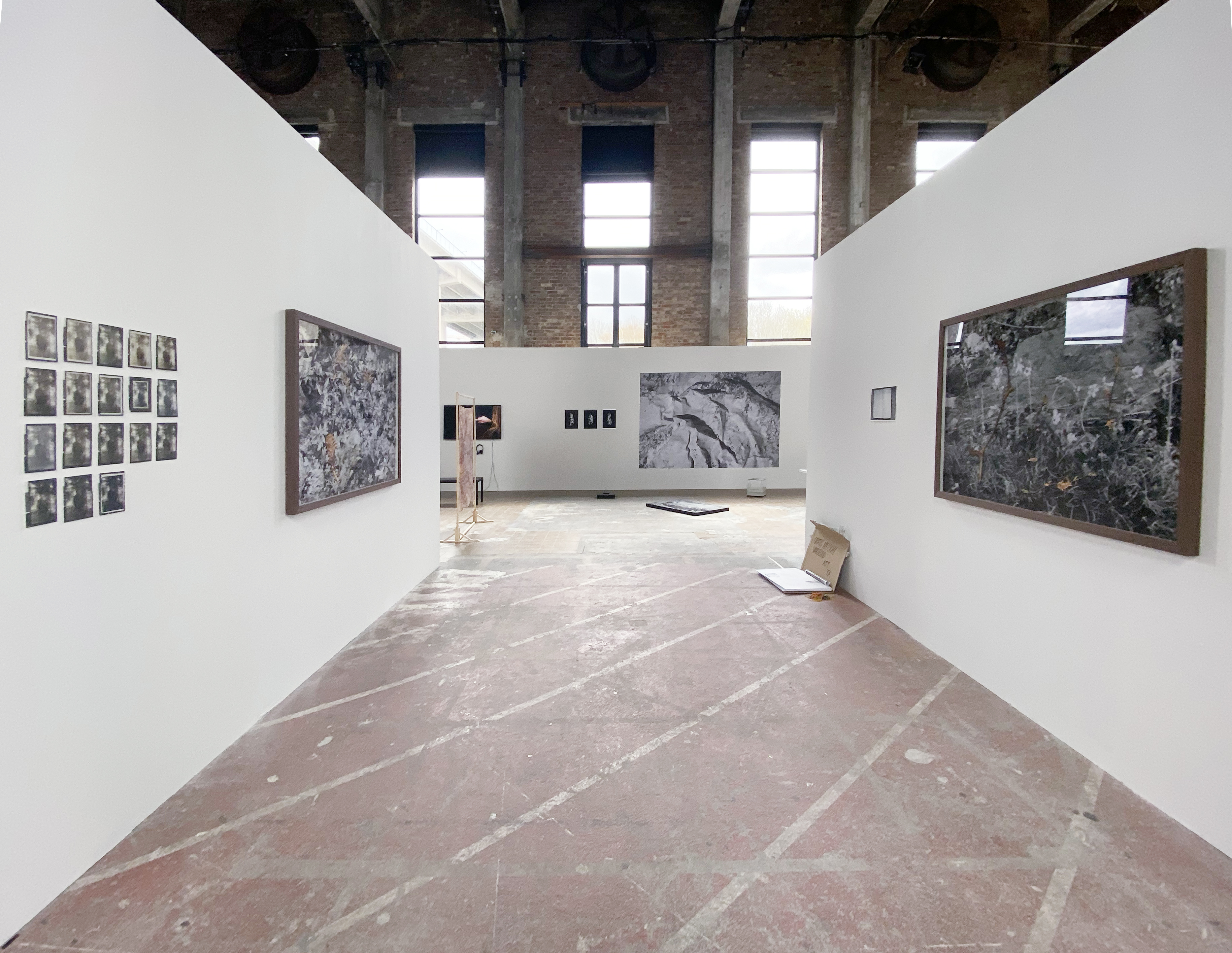
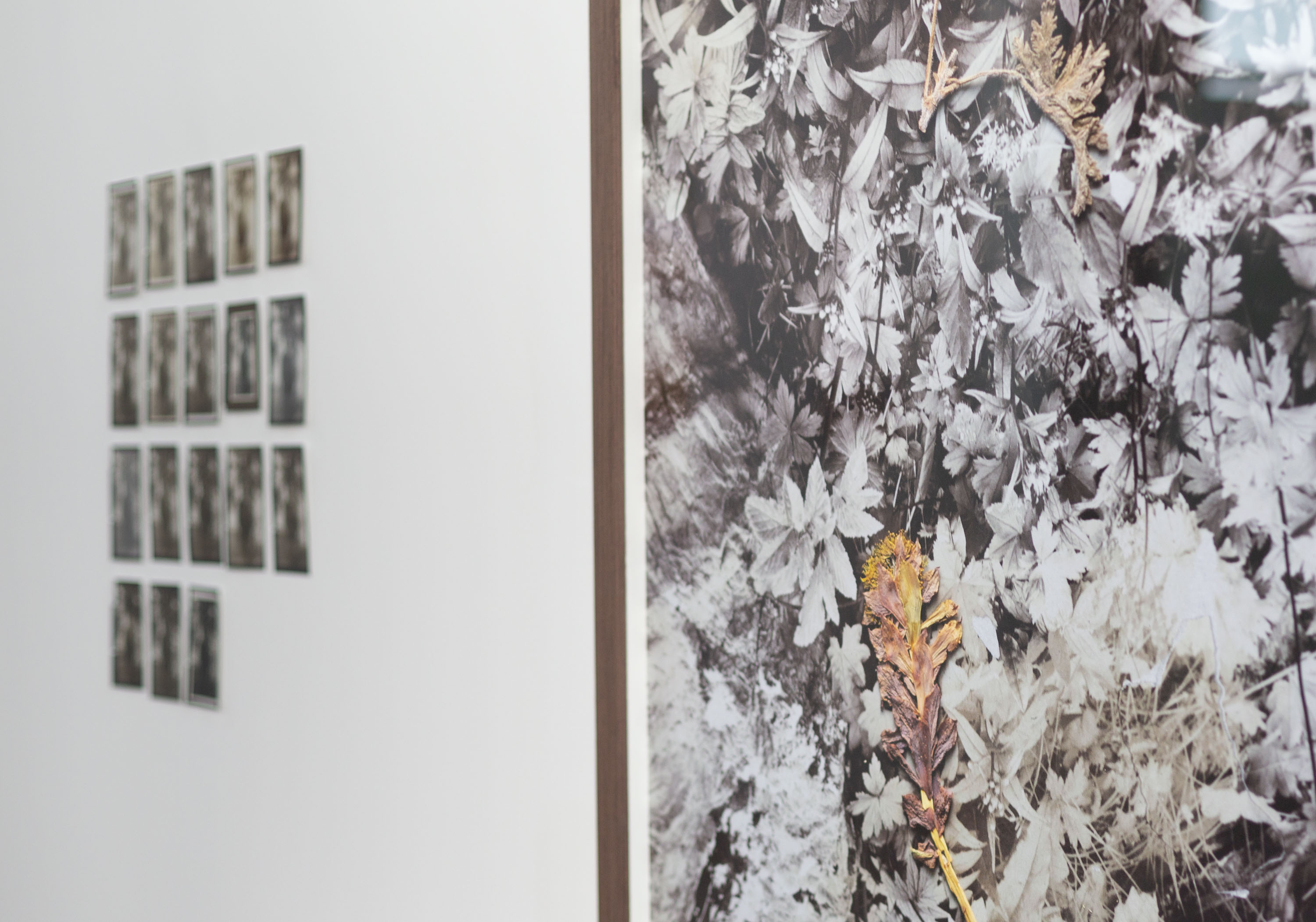

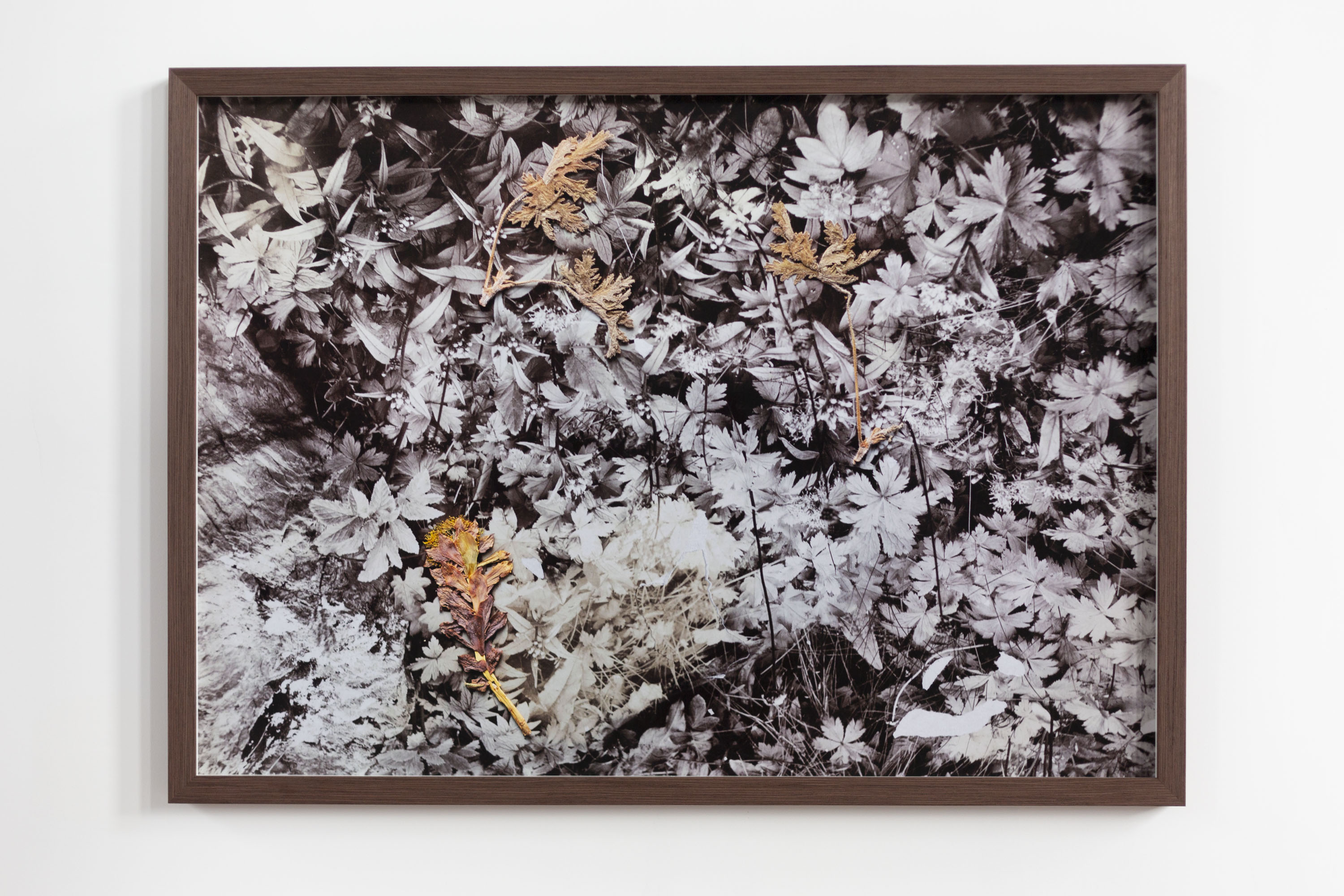
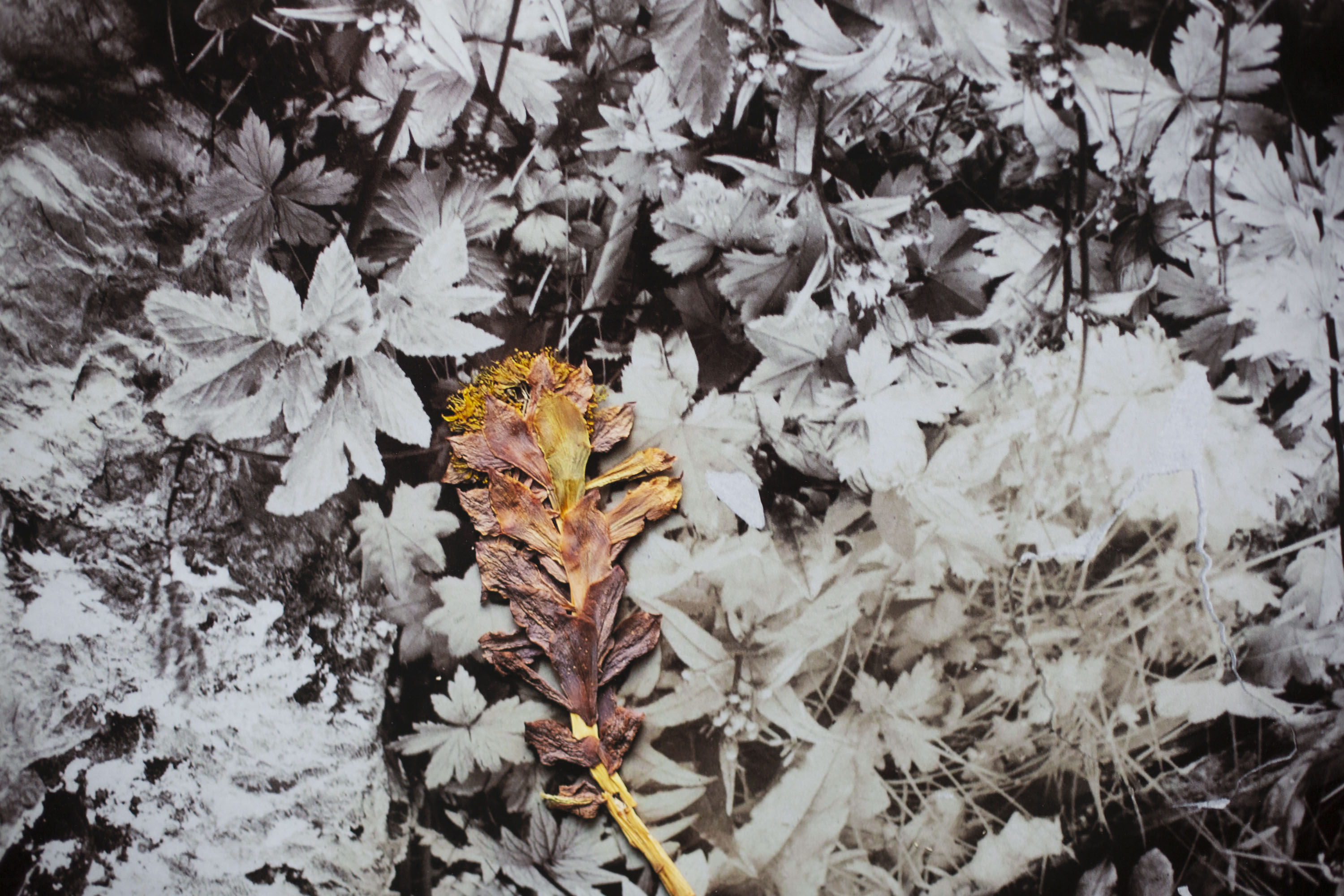
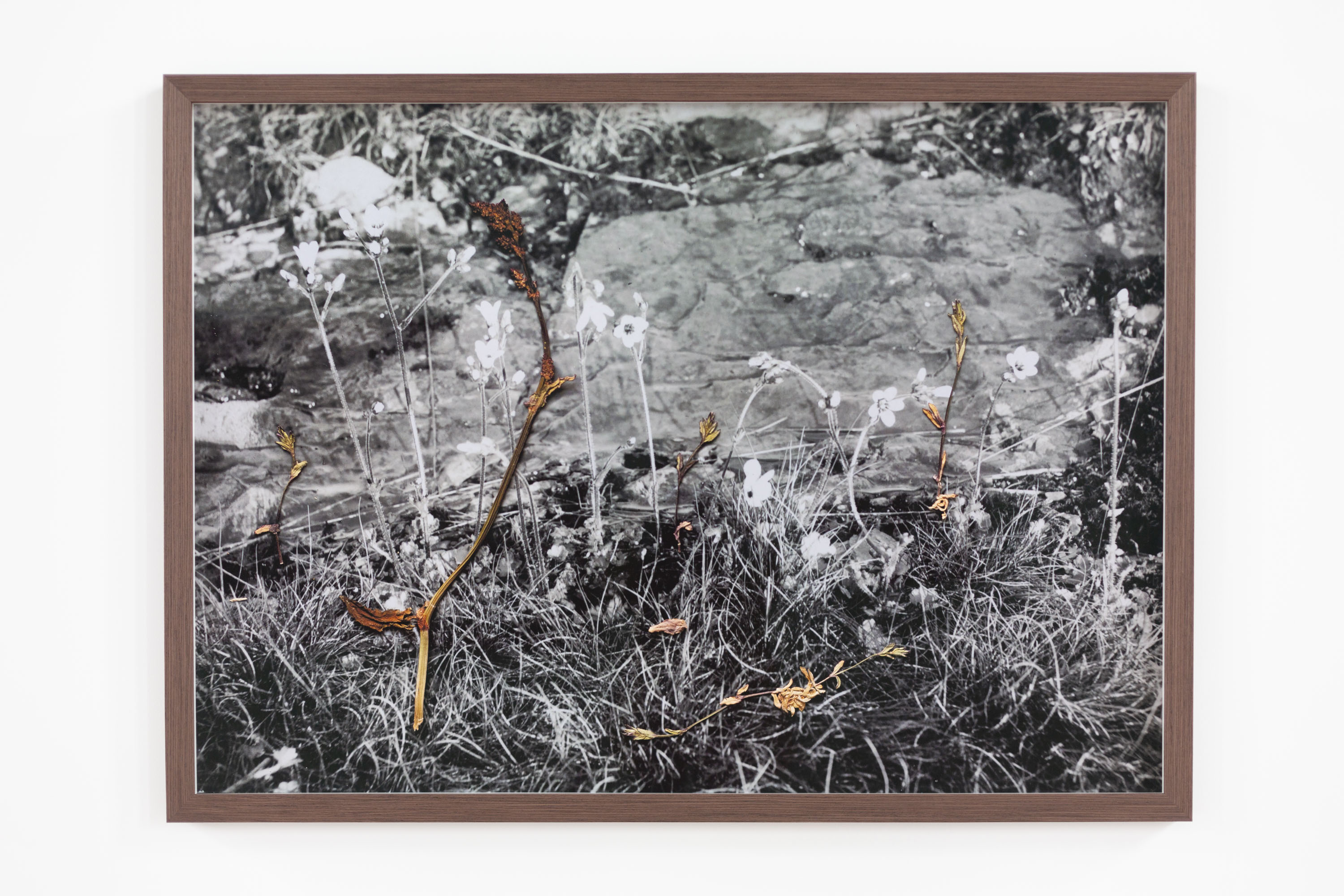
Installationimages from Umeå Konsthall 2023 and Röda Stens Konsthall 2021.
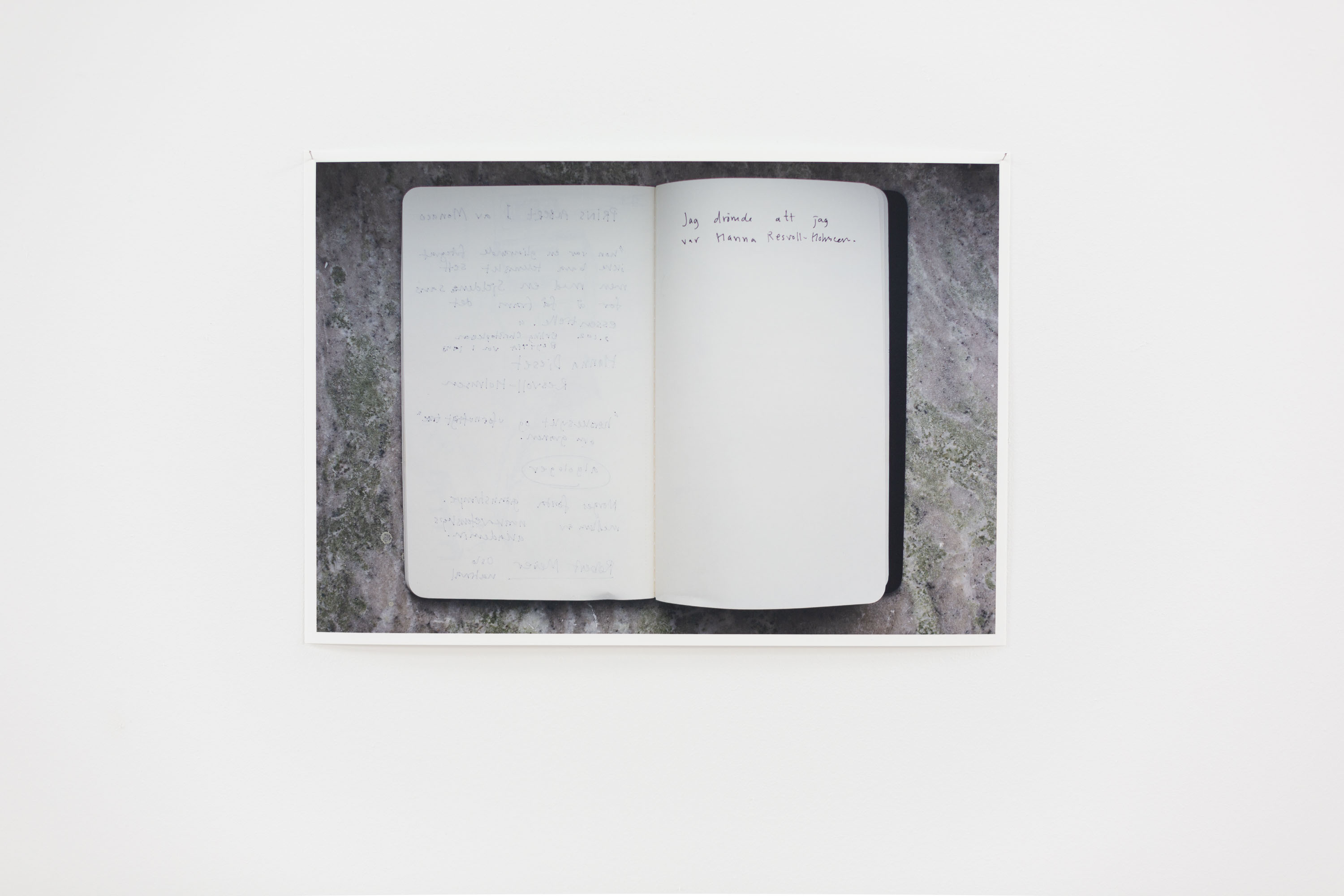
One day in 2021, I open an old notebook from 2014 with the note: 'I had a dream in which I was Hanna Resvoll Holmsen'. This takes me back a couple of years in time and I remember the female botanist who in the early 20th century broke norms and expectations in both her professional life and private life.
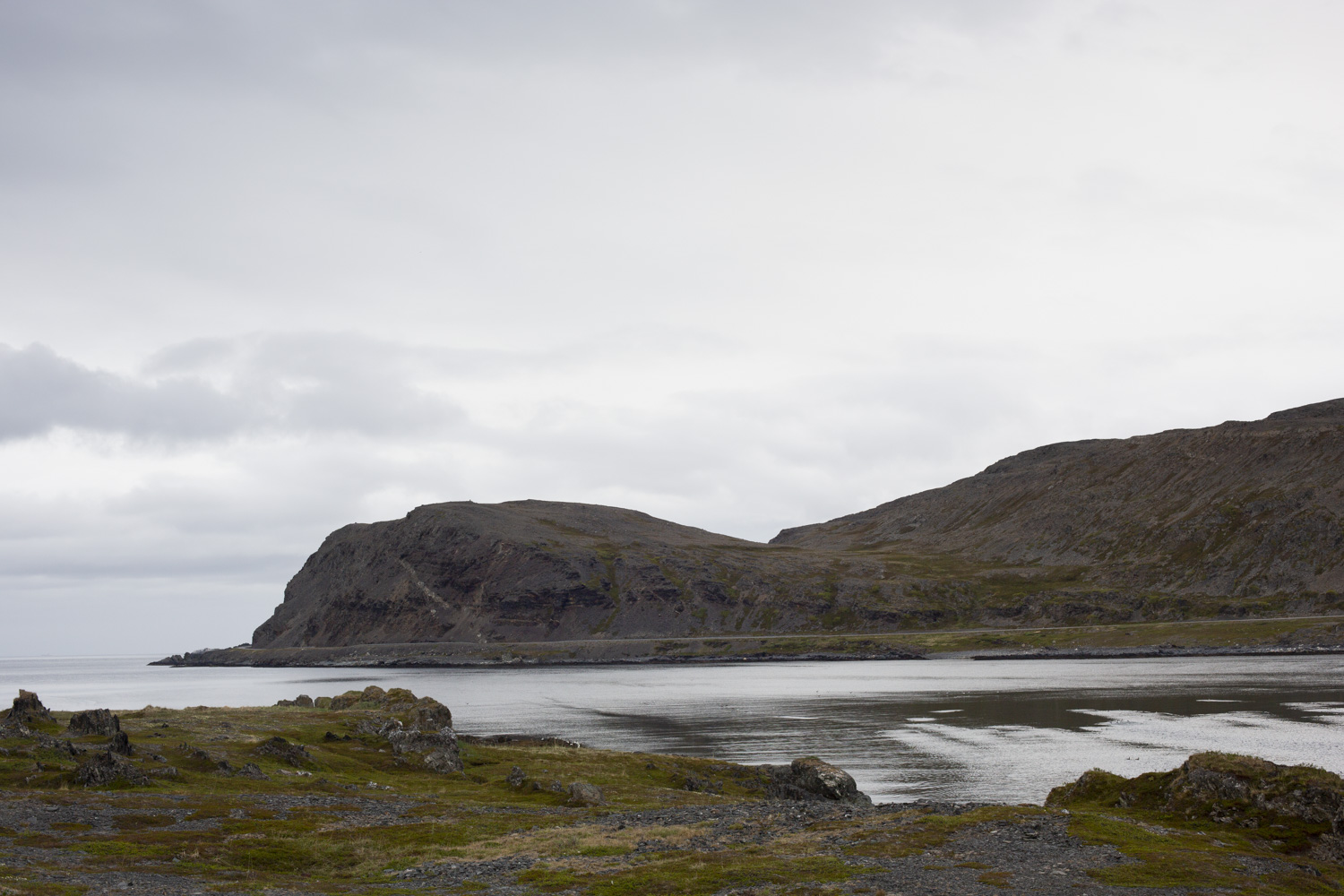
Hanna Resvoll Holmsen (Norway, 1873-1943) was often out by herself on field trips to study Arctic plants. For two summers she camped on Svalbard. She traveled there with a research ship that dropped her off on a beach, so she was there until fall came and she was picked up again. She usually took a camera with her on her travels and photographed extensively. The photograph would follow her throughout her professional career and in Norway she is considered a pioneer in early color photography. Resvoll Holmsen's photographs have been digitized through Norway's National Library. When I understand that we were on the Varanger Peninsula 110 years apart, in 1909 and 2019, I find more and more traces of our meeting. As a professional woman, as a researcher and in motherhood. This project is about time, space and beeing a women.
The works are all a mix of my own photography and Hanna Resvolls Holms photography use with permission from Oslo National Library.
The big images of flowers, is a work that encounter with Hanna Resvoll Holmsen. With an interval of 110 years, her photographs from Berlevåg and my dried flowers from the same place 2019 have met and become a new image, made in 2021.
The work "The Archive" is inspired by Hanna Resvoll Holmsen's photographic archive, which is preserved at the National Library in Oslo. In eight archive boxes, photographs from a field trip on the Varanger Peninsula in 2019 have been sorted. Here, all the pictures that I took with my digital system camera should be printed and preserved for the future, they are sorted by place and consist of motifs of both nature and the city as personal pictures of my family.
MJÖLK
Photography / Graphic / Video / Texts
2024 - ongoing
Photographer Mats Engfors - Instagram: @fotographicsweden or Facebook: @Fotographic


Installationsphoto from Havremagasinet 2025
During 2024 and 2025 I have expolored the theme in different mediums. During the summer of 2025, I collected different types of milk cartons, l mixed the color of the package on the cover and color the cartons and then make a gravure print with them. The thought of the function of the milk carton, the distribution of food and our relationship to where the food comes from strikes me as I crank the printing press. Fresh milk.
Every print has their own titel.
For a summerexhibition I made a soundinstallation. From a milk stand (also called mjölkpall or mjölkbrygga) a sound is played from the empty milk can is the sound of a milking machine milking cows. The stands and the distribution of milk with milk cans disappeared when milk tankers replaced the trucks. Today, they often hold flowers, mailboxes, or other decorative items.
The installation is based on a photograph of a milk stand in Sotenäs Municipality, Bohuslän, from 1991, combined with the Swedish Dairy Association’s recommended blueprints that were sent out to farmers who were building their own milk stands. The photograph and the blueprints were published in The History of the Milk Stand – A Study of the More Than Fifty-Year-Long Milk Stand Era by Torsten Sigfridsson in 1995.
This is an ongoing process; the startingpoint is my grandmother's farm in Tornevalley, through photography, video and text I want to see what has happened to the dairy farms in the north and what they are used for today.
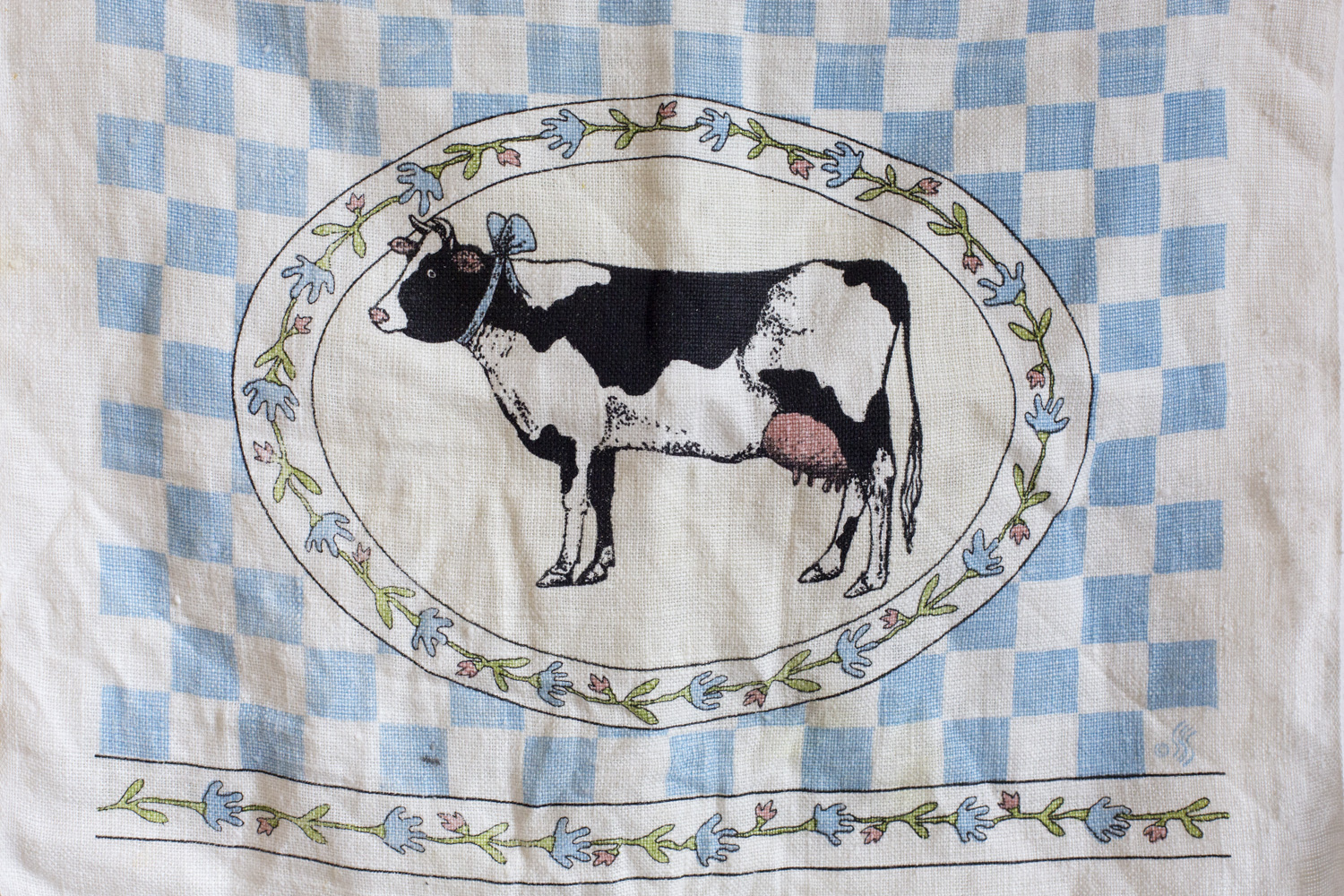
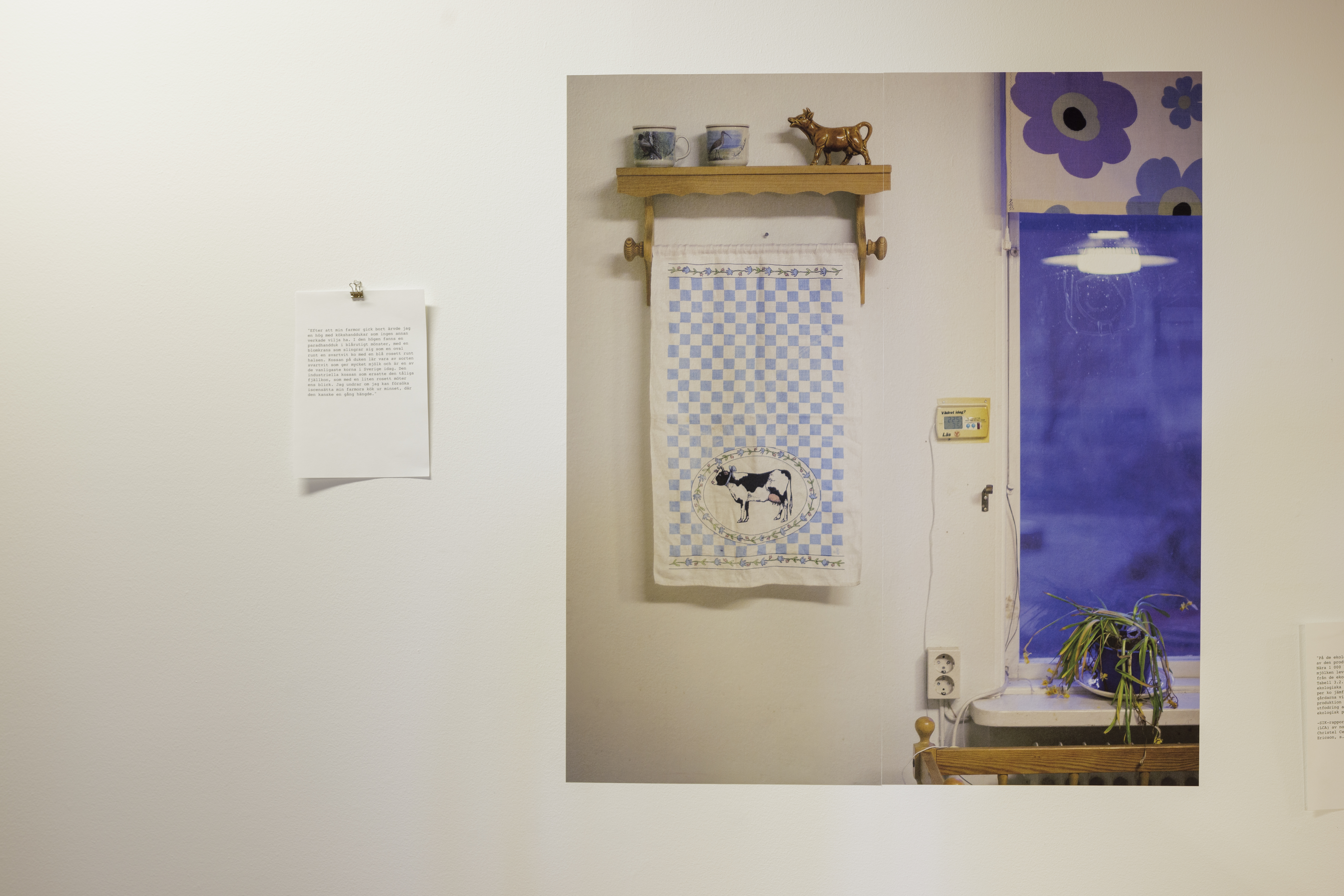
After my grandmother passed away, I inherited a pile of tea towels that no one else seemed to want. In that pile was a parade towel in a blue checkered pattern, with a wreath of flowers winding like an oval around a black and white cow with a blue bow around its neck. The cow on the towel is said to be of the black and white variety, which produces a lot of milk and is one of the most common cows in Sweden today. My grandmother was one of many who replaced her mountain cows with the black and white breed that could produce more milk in order to increase the profitability of a small farm.
Just by looking at how the dairy industry followed the political swings for a century, many questions arise: The farmers, the cows and the milk had been encouraged and exalted during the Second World War, but shortly afterwards the political message changed, formally through a parliamentary decision in 1947: Sweden should become a modern industrial country! Sell the cows! A quote that I found by Sune Jonsson reads as follows: "And agricultural policy was the awareness that the farmer's work was necessary for the nation's livelihood."
In a study conducted at SLU by Carin Martiin, it is clear that the number of cows has more than halved in 40 years. In 1980, there were 656,000 dairy cows distributed over just over 42,000 herds with an average of about 16 cows. In 2019, there were just under 306,000, distributed over 3,174 herds - the herd had increased from 16 to 96 cows. Already in 1980, people were worried, because when you looked back to 1950 - the number of cows was then 1,654,000 and the number of herds 267,000 with an average of 6 cows. In the study that Martiin did, there was also a strong picture that many farmers wanted to continue with milk production, but that it still did not happen.
![]()
![]()
![]() Colliographic 2025
Colliographic 2025
![]()
![]() Installationsphoto from Bjurholmsbiennalen 2025
Installationsphoto from Bjurholmsbiennalen 2025
After my grandmother passed away, I inherited a pile of tea towels that no one else seemed to want. In that pile was a parade towel in a blue checkered pattern, with a wreath of flowers winding like an oval around a black and white cow with a blue bow around its neck. The cow on the towel is said to be of the black and white variety, which produces a lot of milk and is one of the most common cows in Sweden today. My grandmother was one of many who replaced her mountain cows with the black and white breed that could produce more milk in order to increase the profitability of a small farm.
Just by looking at how the dairy industry followed the political swings for a century, many questions arise: The farmers, the cows and the milk had been encouraged and exalted during the Second World War, but shortly afterwards the political message changed, formally through a parliamentary decision in 1947: Sweden should become a modern industrial country! Sell the cows! A quote that I found by Sune Jonsson reads as follows: "And agricultural policy was the awareness that the farmer's work was necessary for the nation's livelihood."
In a study conducted at SLU by Carin Martiin, it is clear that the number of cows has more than halved in 40 years. In 1980, there were 656,000 dairy cows distributed over just over 42,000 herds with an average of about 16 cows. In 2019, there were just under 306,000, distributed over 3,174 herds - the herd had increased from 16 to 96 cows. Already in 1980, people were worried, because when you looked back to 1950 - the number of cows was then 1,654,000 and the number of herds 267,000 with an average of 6 cows. In the study that Martiin did, there was also a strong picture that many farmers wanted to continue with milk production, but that it still did not happen.


Ädno / Älven / The River
Book
2020

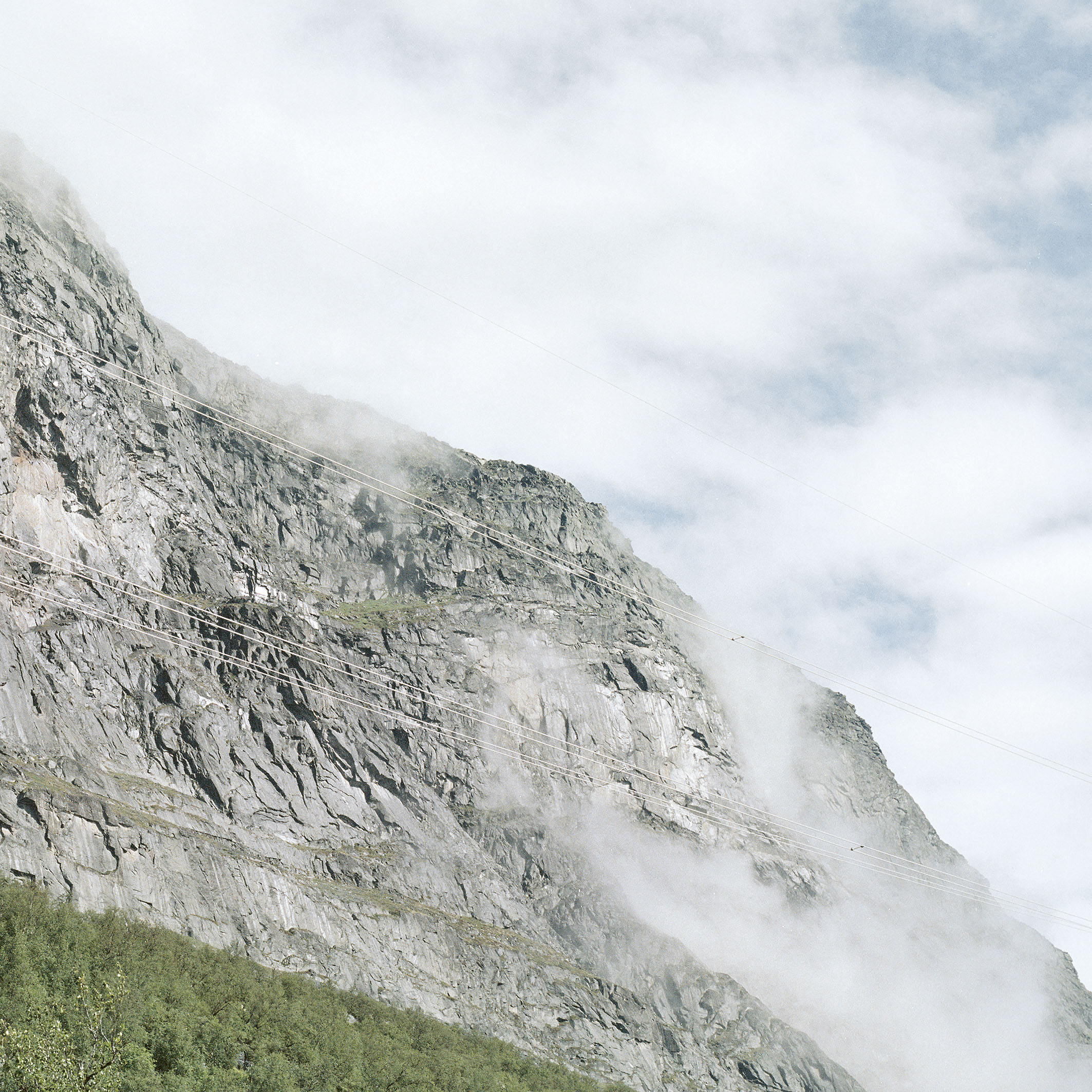
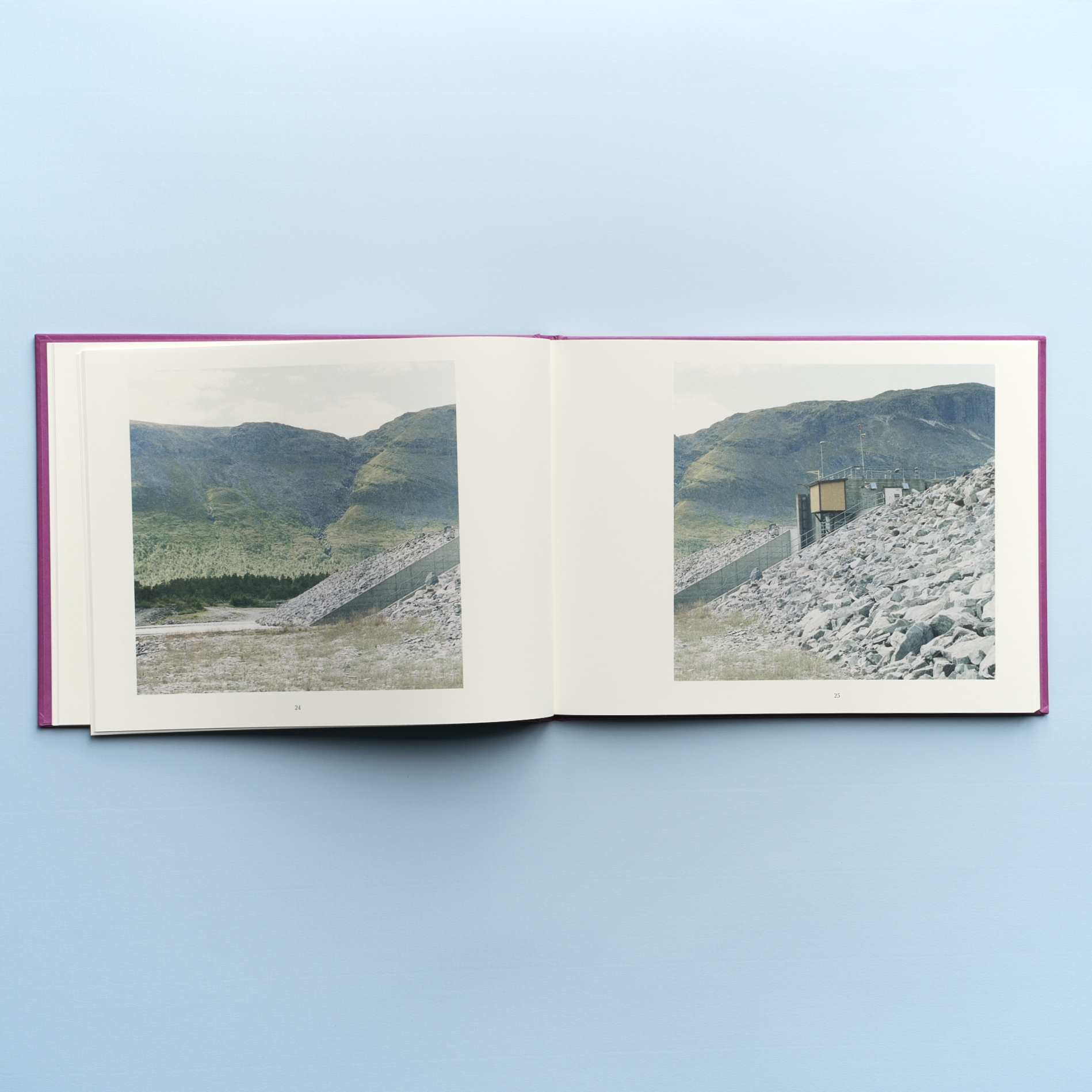
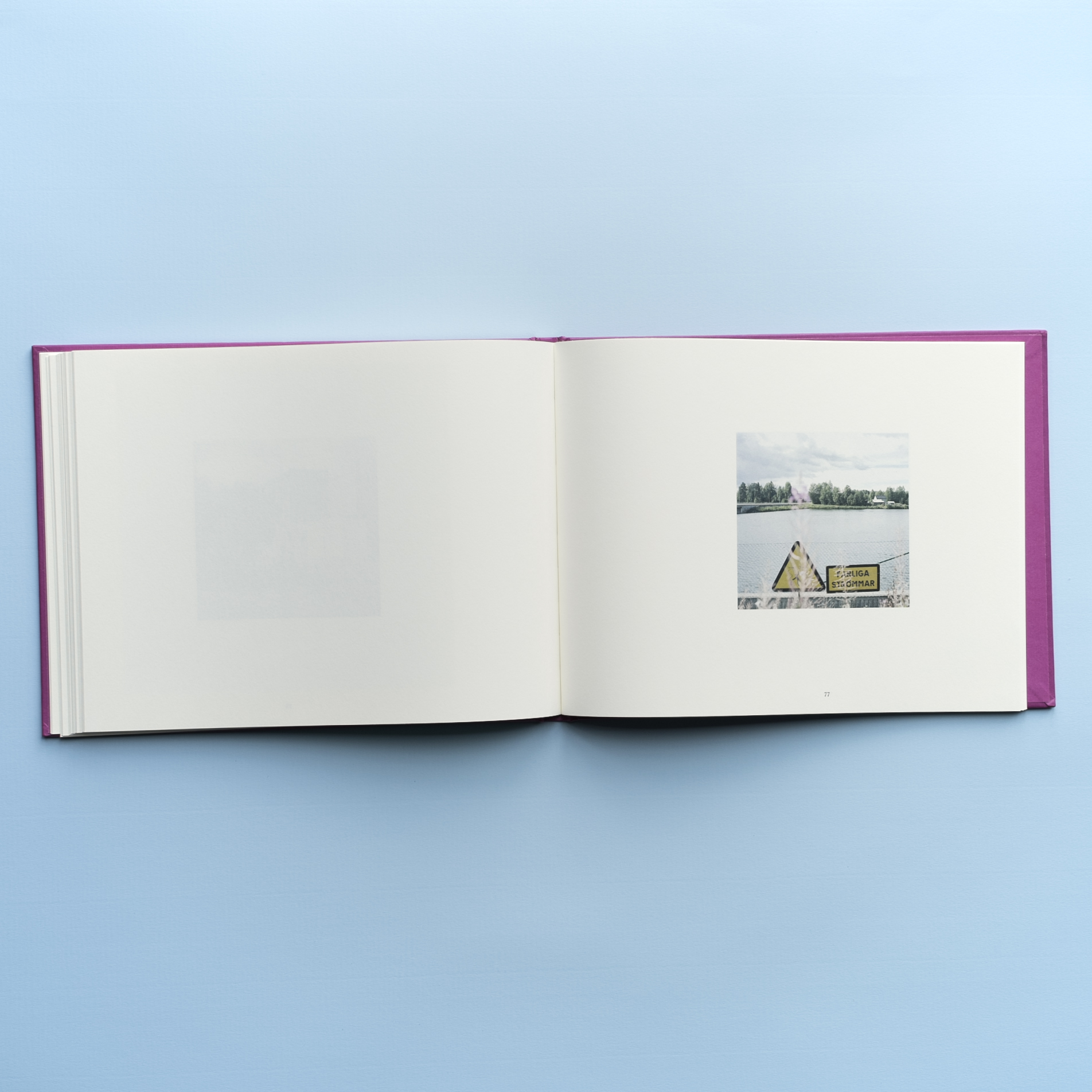


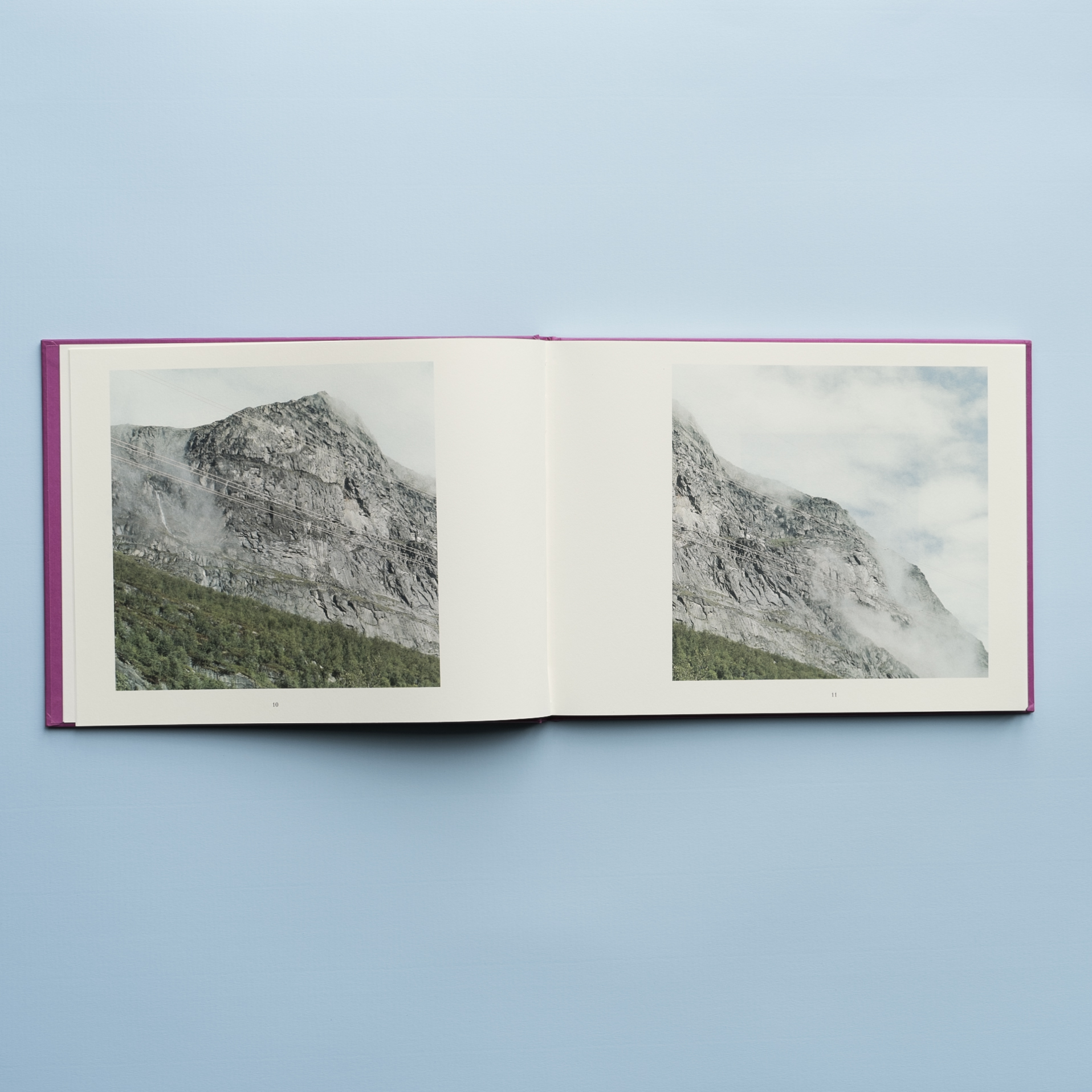

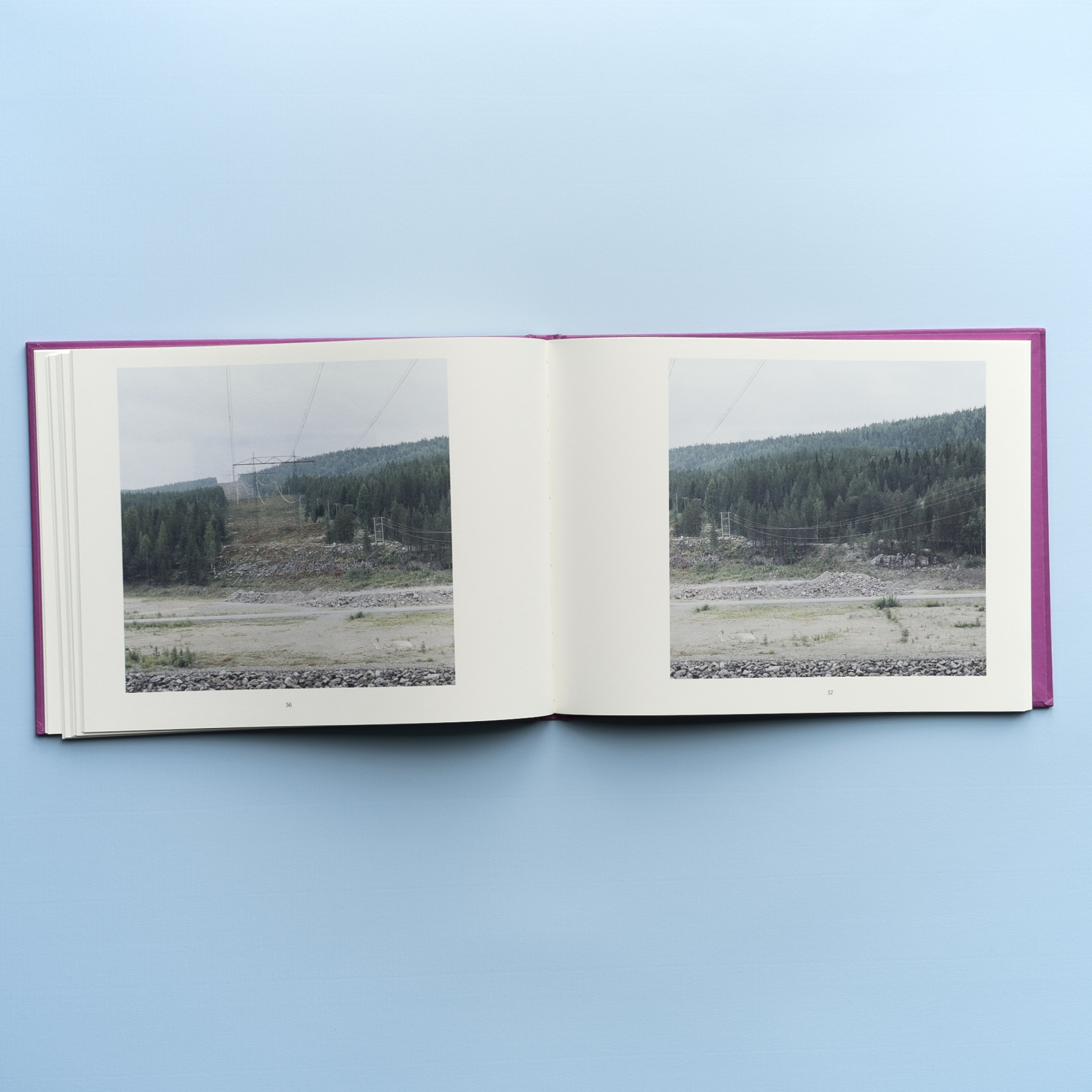
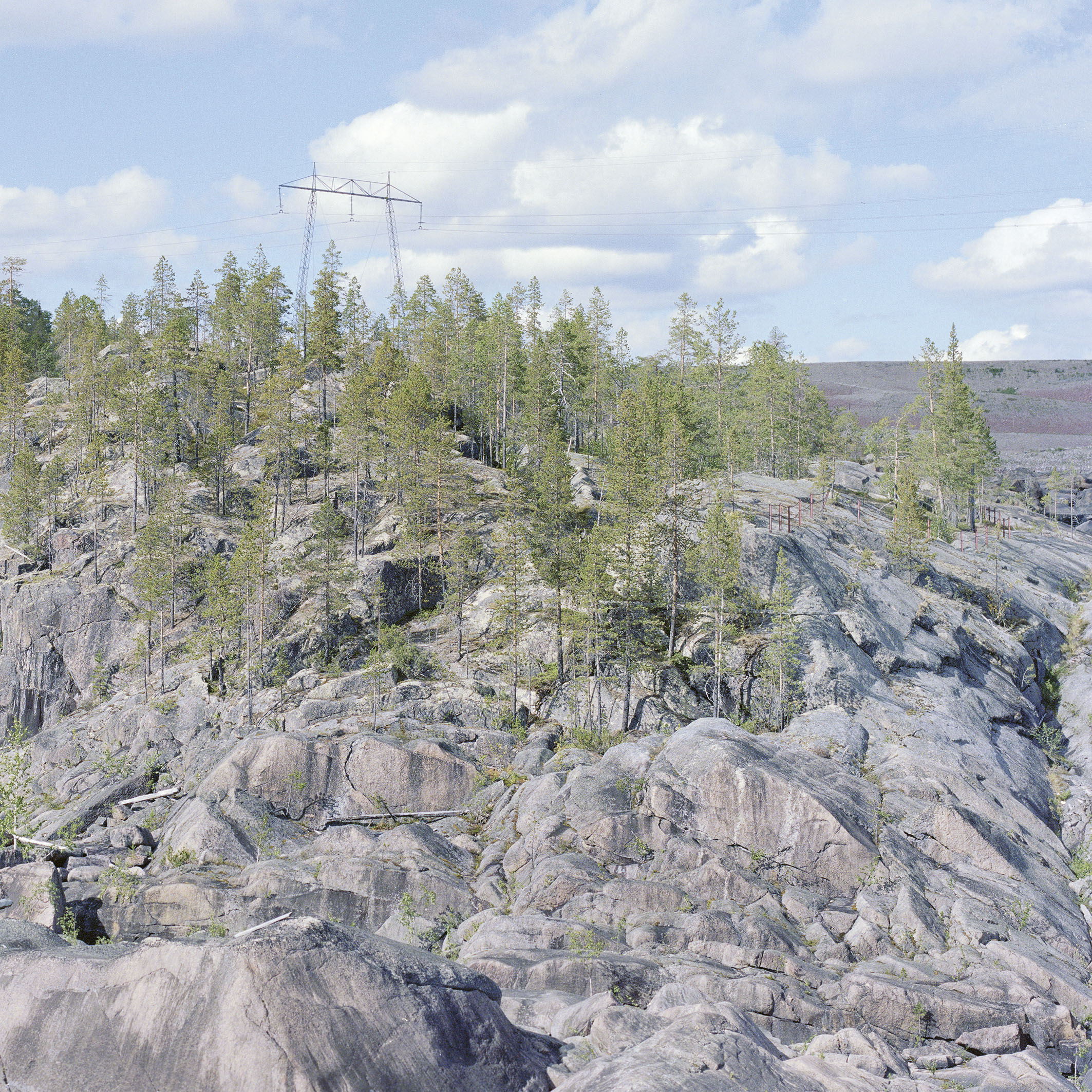
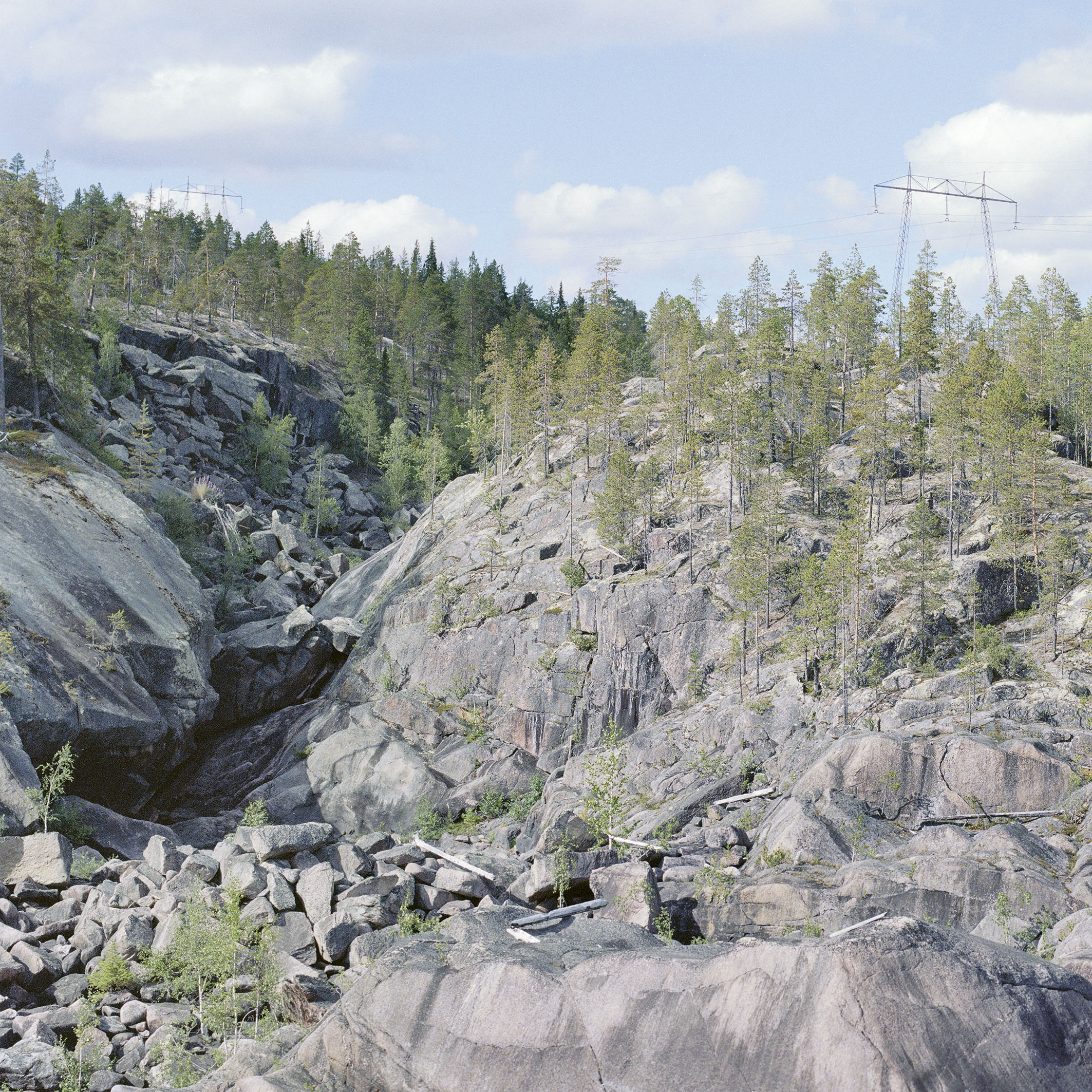
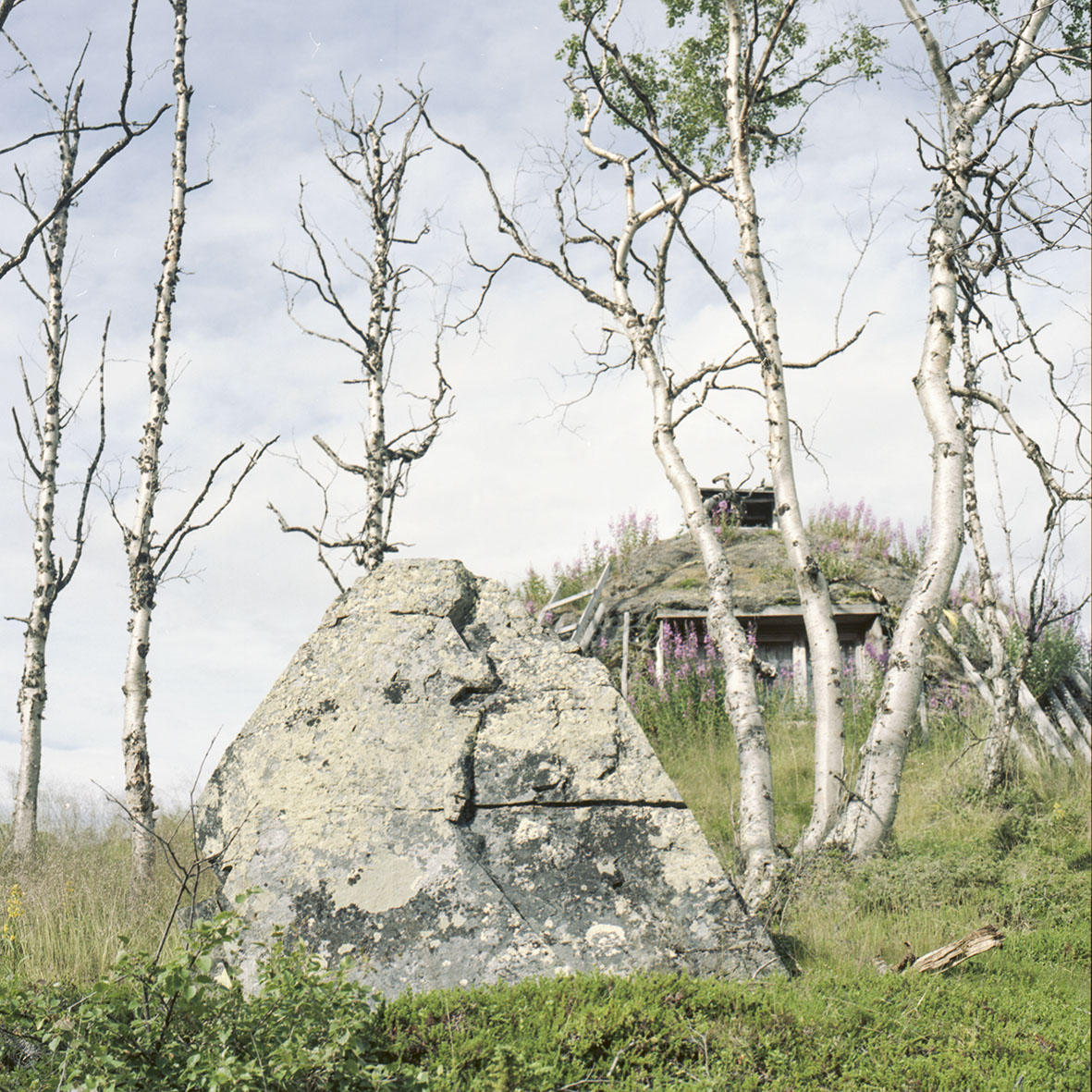
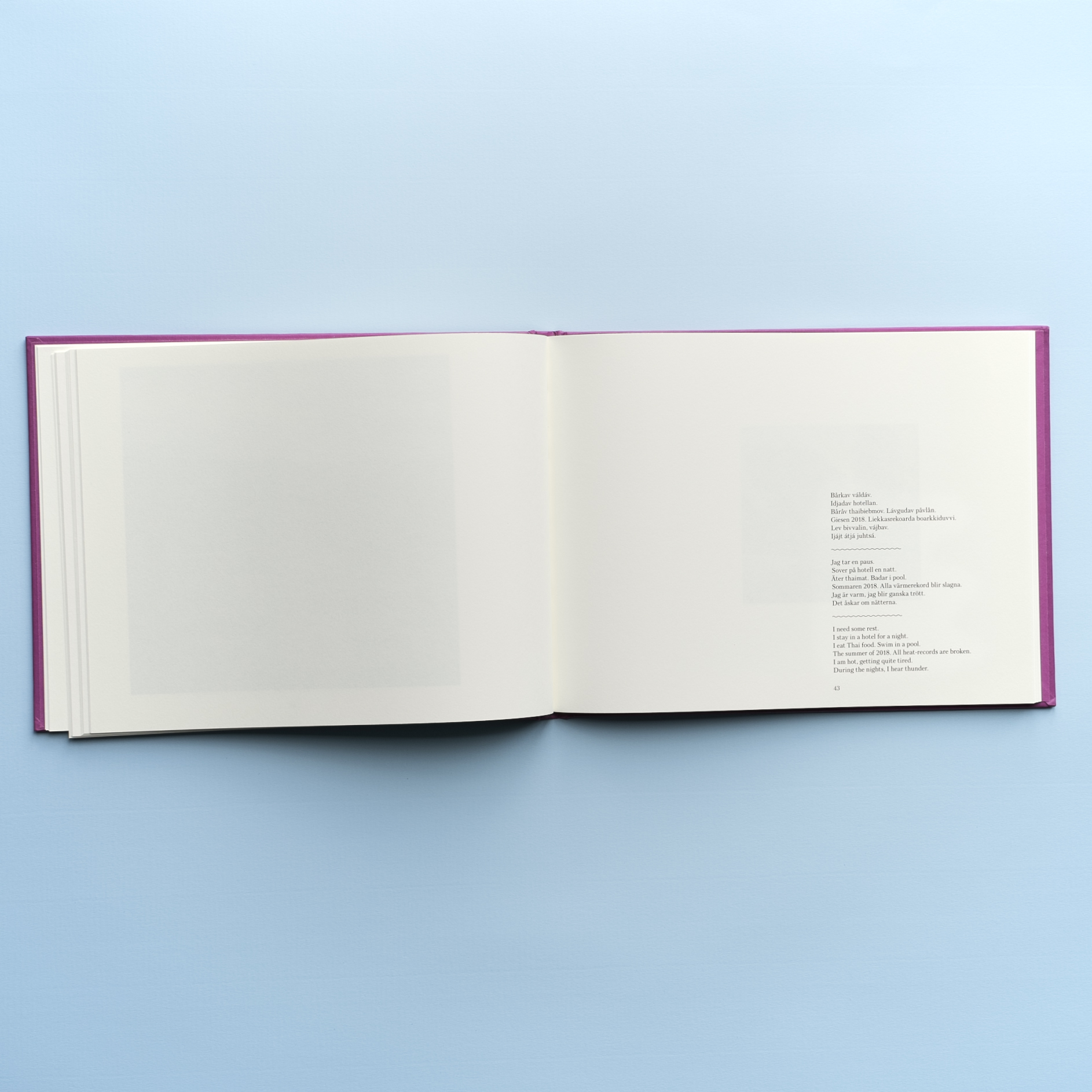
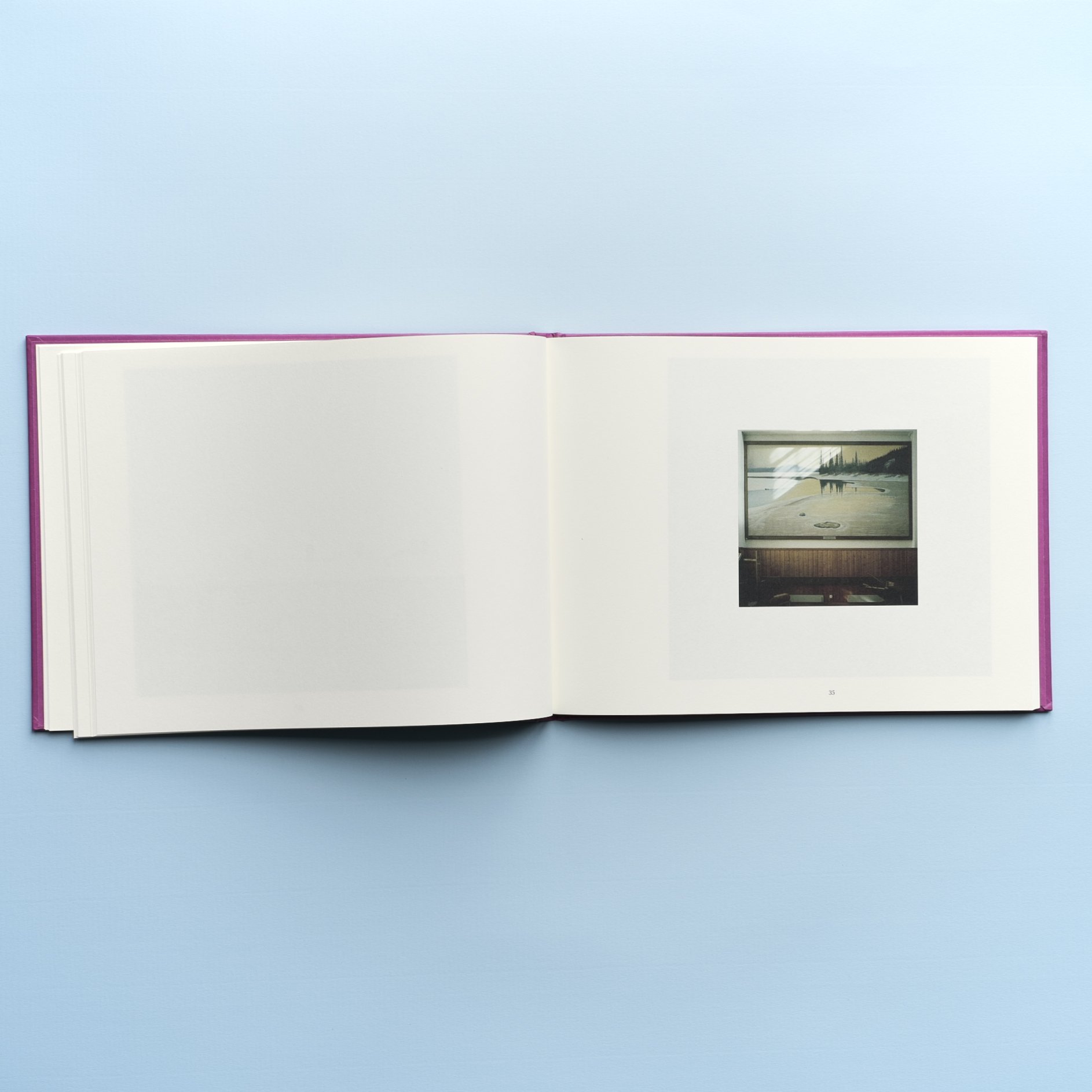
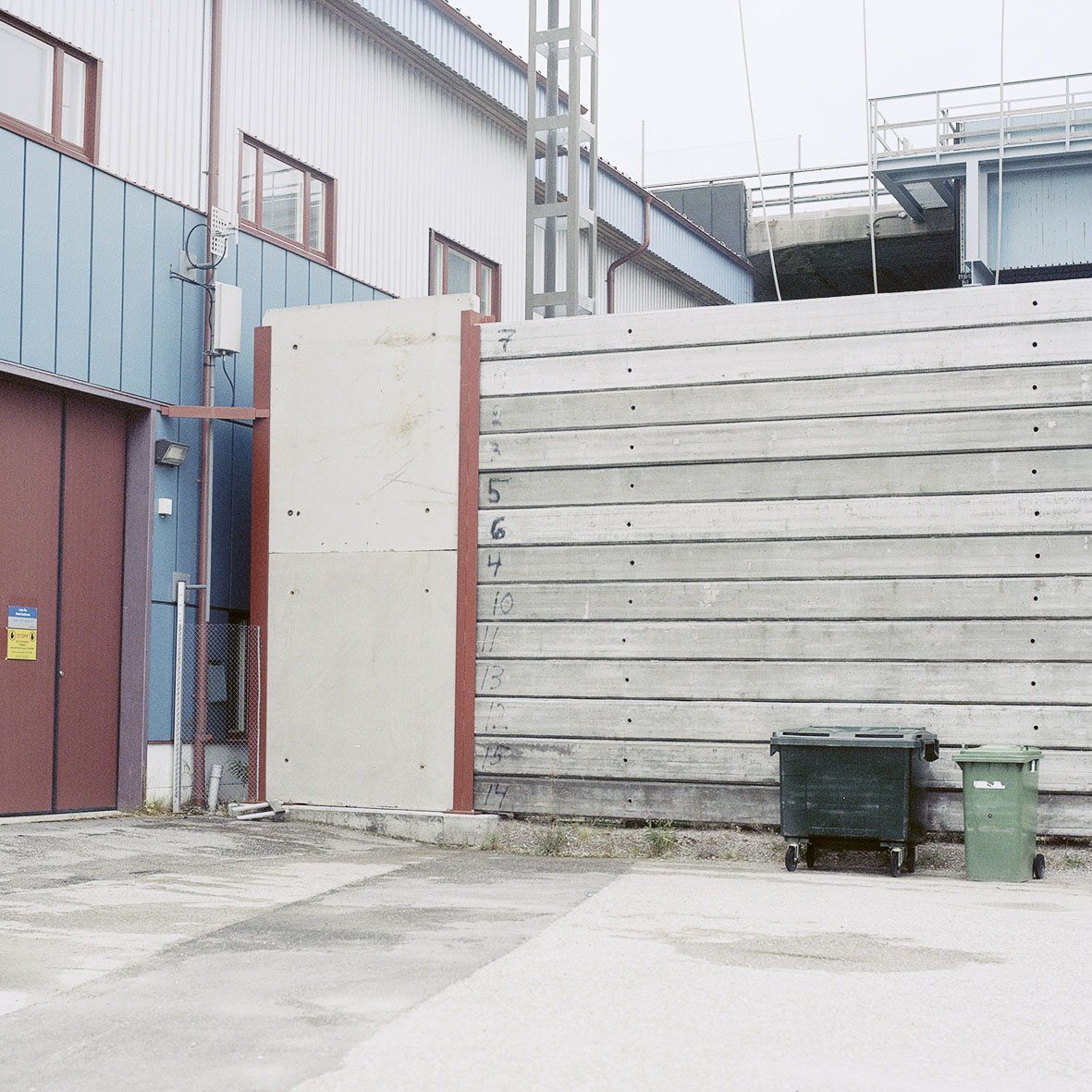
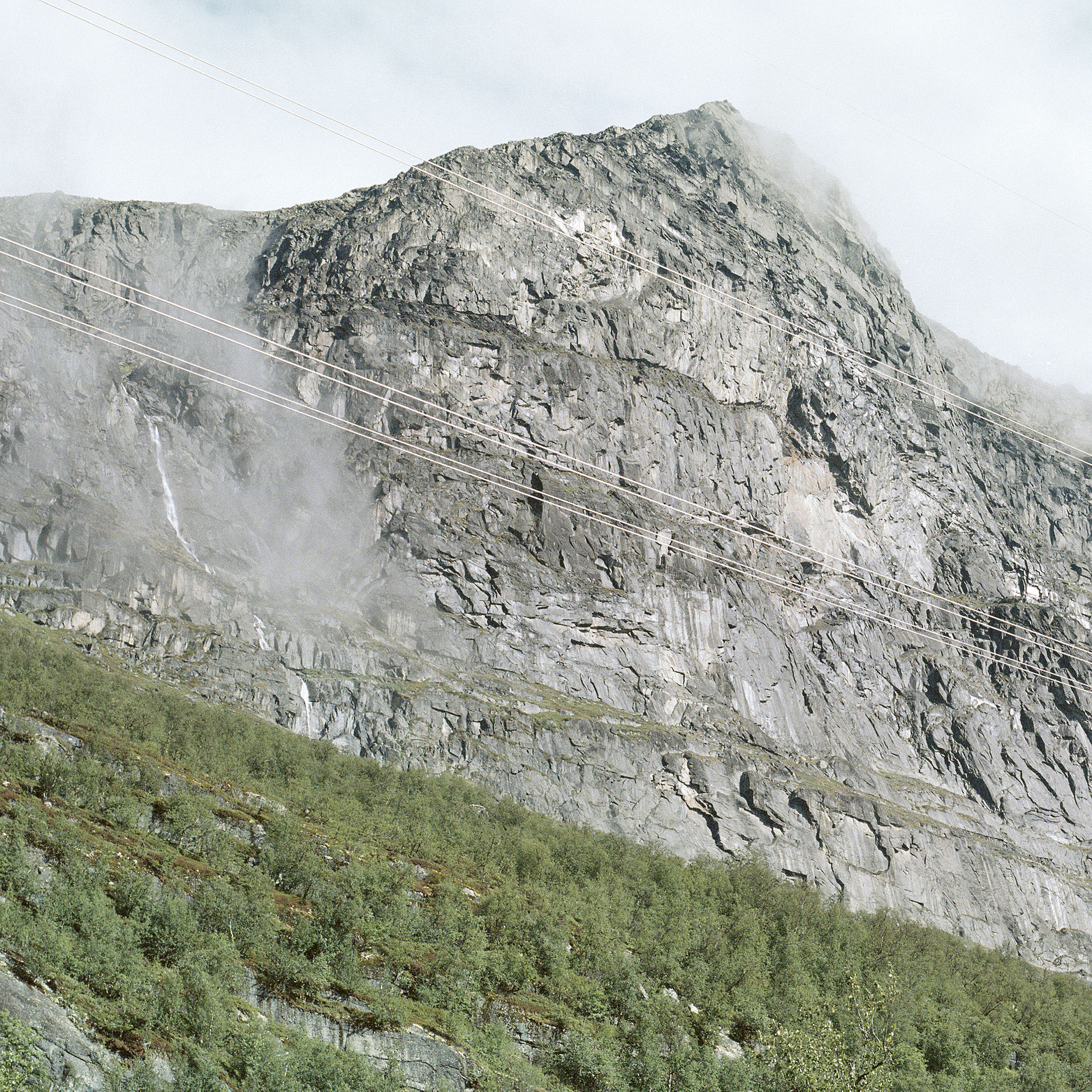
This is book follows my journey along the Lule River, from the mountains to sea, made during 2018. With a pink hard cover, inspired by the bright color of the flower fireweed, the journey is framed within its brutal landscape of industries, dry furrows, electricity lines, old forrests and still water. It takes us 450 km straight through the county Norrbotten.
Within the book, landscapes appear to be cut up into two pieces. I have been working with my original 6x6 cm square negatives, cutting them up in the digital photographic manipulation tool and turning them from one into two photographs. By doing this, I am on one hand telling that this is a re-reading of a place. The cut up mediates an image beyond what we are looking at. In this remake and change, I want to question how mythologies and the past have been shaped and by whom. This might be a way to re-construct our idea of what we are looking at. Both of photography as a medium but also the tradition of landscape-photography.
The book also contains a map, a risoprint, of the different maps of the river. I work with three different languages in the book: Lulesami, Swedish and English. Translated by Anders Rimpi and Emma Johnsson.
Within the book, landscapes appear to be cut up into two pieces. I have been working with my original 6x6 cm square negatives, cutting them up in the digital photographic manipulation tool and turning them from one into two photographs. By doing this, I am on one hand telling that this is a re-reading of a place. The cut up mediates an image beyond what we are looking at. In this remake and change, I want to question how mythologies and the past have been shaped and by whom. This might be a way to re-construct our idea of what we are looking at. Both of photography as a medium but also the tradition of landscape-photography.
The book also contains a map, a risoprint, of the different maps of the river. I work with three different languages in the book: Lulesami, Swedish and English. Translated by Anders Rimpi and Emma Johnsson.
Selfpublished photobook
ISBN 9789151943237
Buy : Nevabooks or Konst-ig Bokhandel
Documentation of the book (c) Fia Doepel
More about the book:
Tidskriften Verk: Det rinnande vattnet som inramning och ämne - Mattias Lundblad
Omkonst: Dramatik med påfallande lugn - Mattias Lundblad
Natur: När Älven tystnar - Anna Froster
Hasselblad: Boksläpp - samtal med Louise Wolthers
Norrbottens Kuriren: Det sakralt vackra möter det djupt problematiska - Regina Nordström
ISBN 9789151943237
Buy : Nevabooks or Konst-ig Bokhandel
Documentation of the book (c) Fia Doepel
More about the book:
Tidskriften Verk: Det rinnande vattnet som inramning och ämne - Mattias Lundblad
Omkonst: Dramatik med påfallande lugn - Mattias Lundblad
Natur: När Älven tystnar - Anna Froster
Hasselblad: Boksläpp - samtal med Louise Wolthers
Norrbottens Kuriren: Det sakralt vackra möter det djupt problematiska - Regina Nordström
Exhibitions: Ädno / Älven / The River
Photography / archive / Video / installation
2019-2025
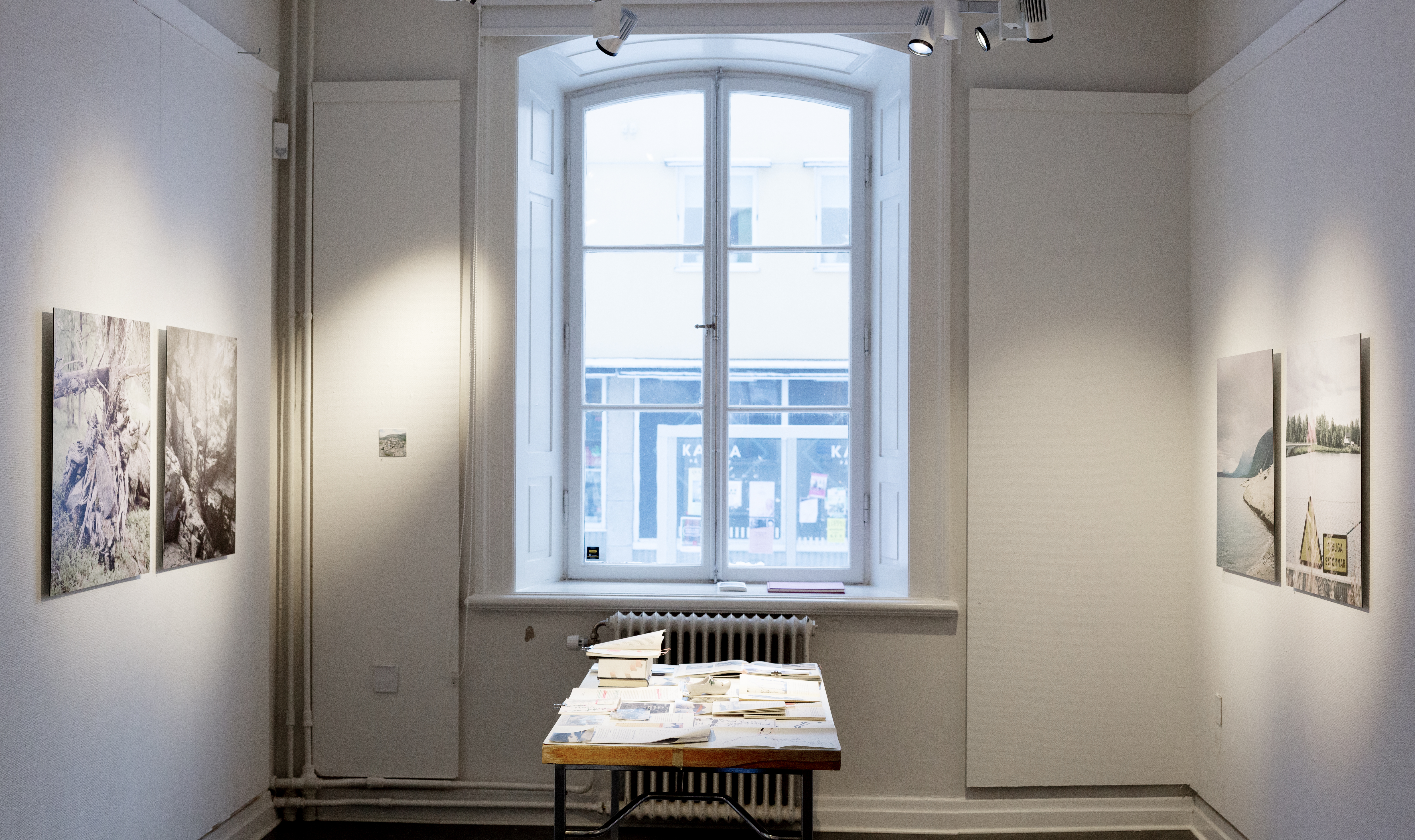
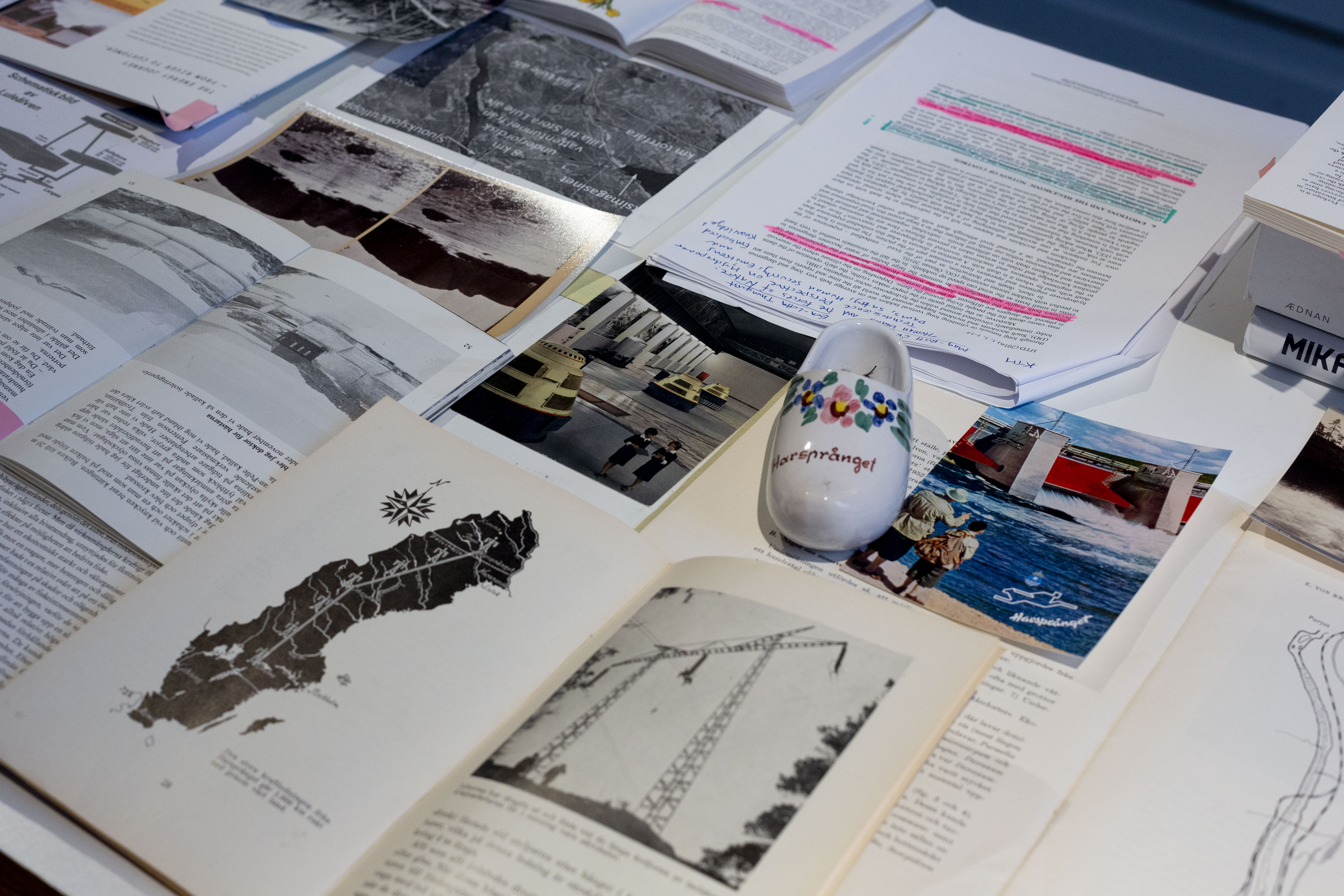

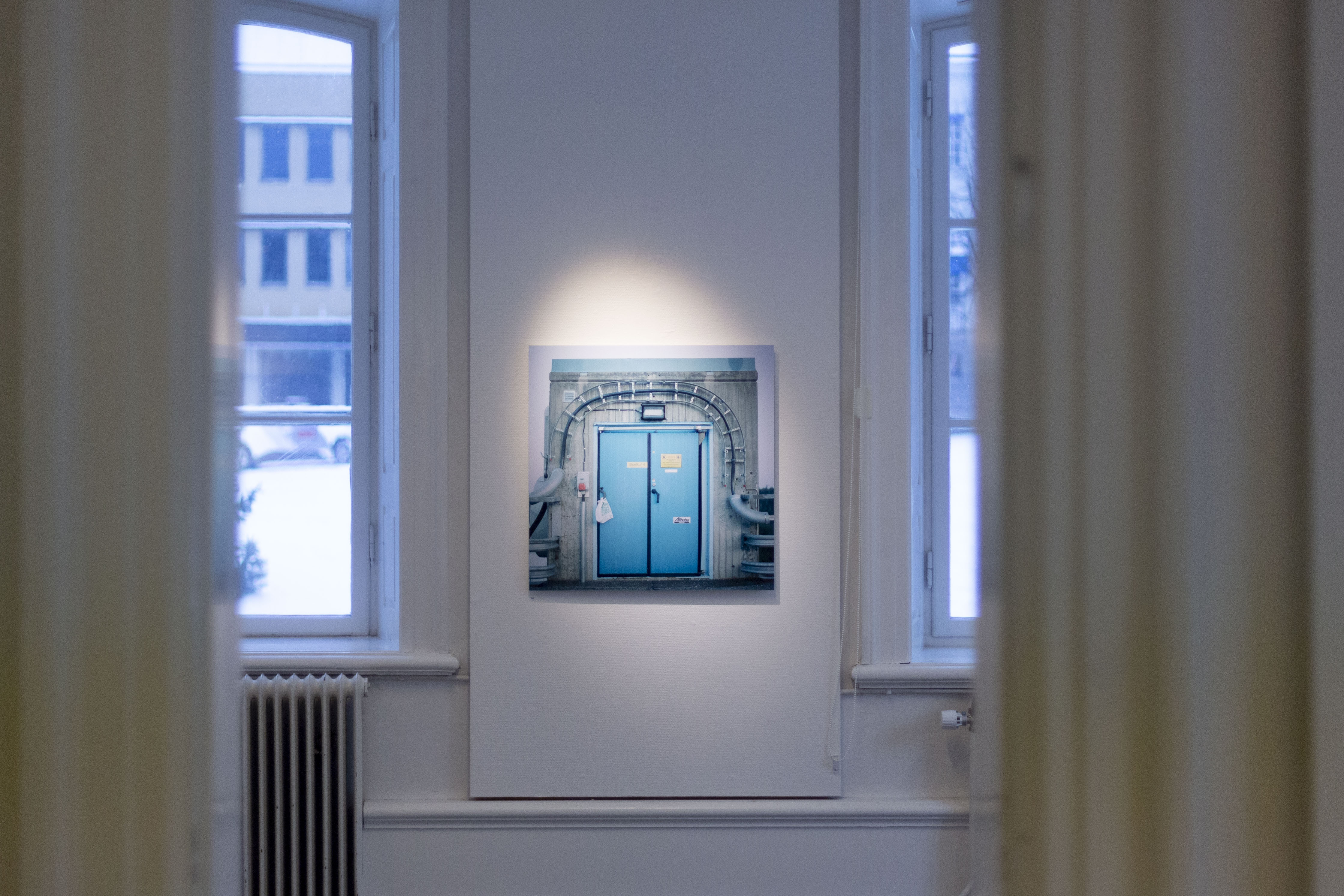

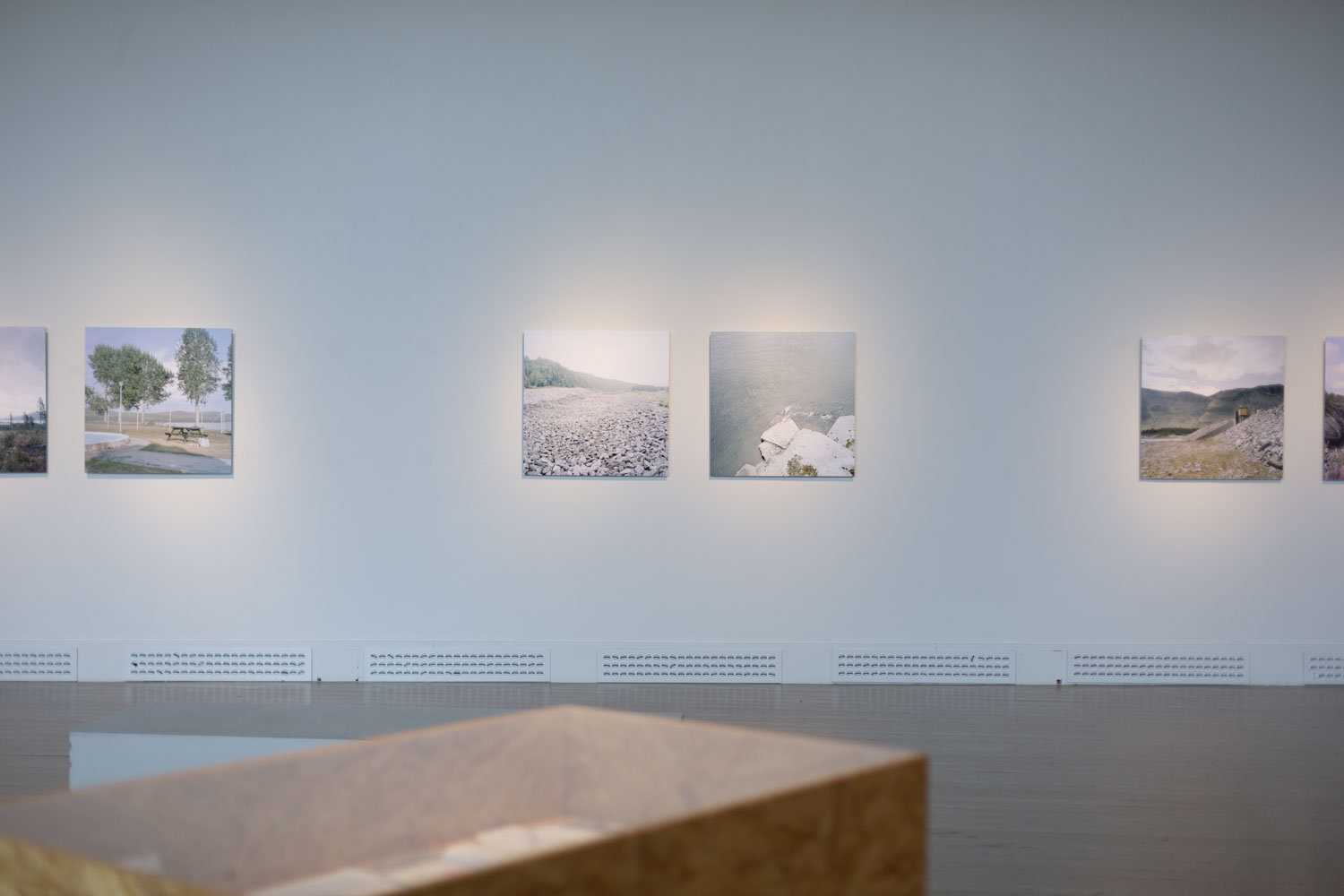

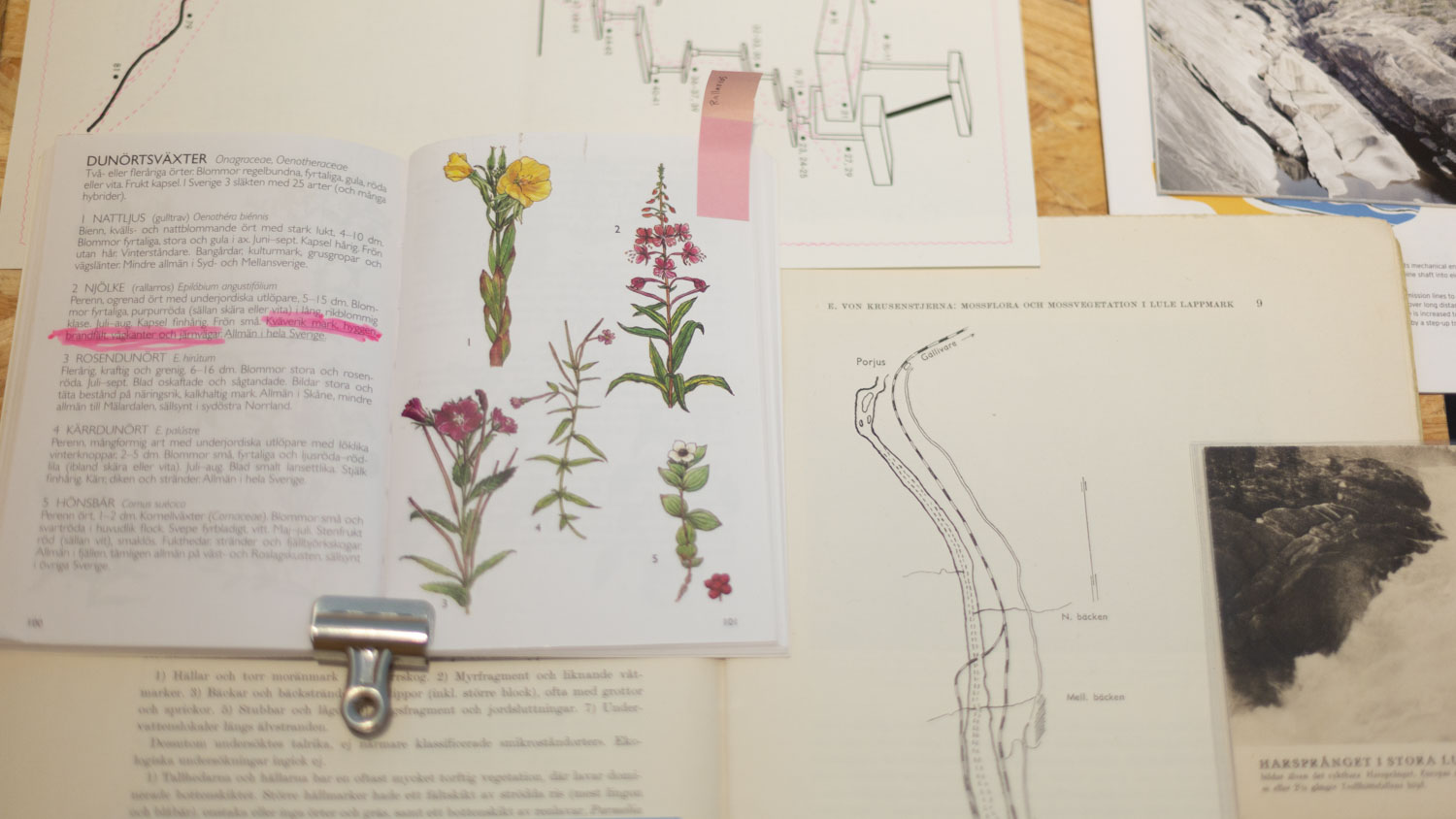
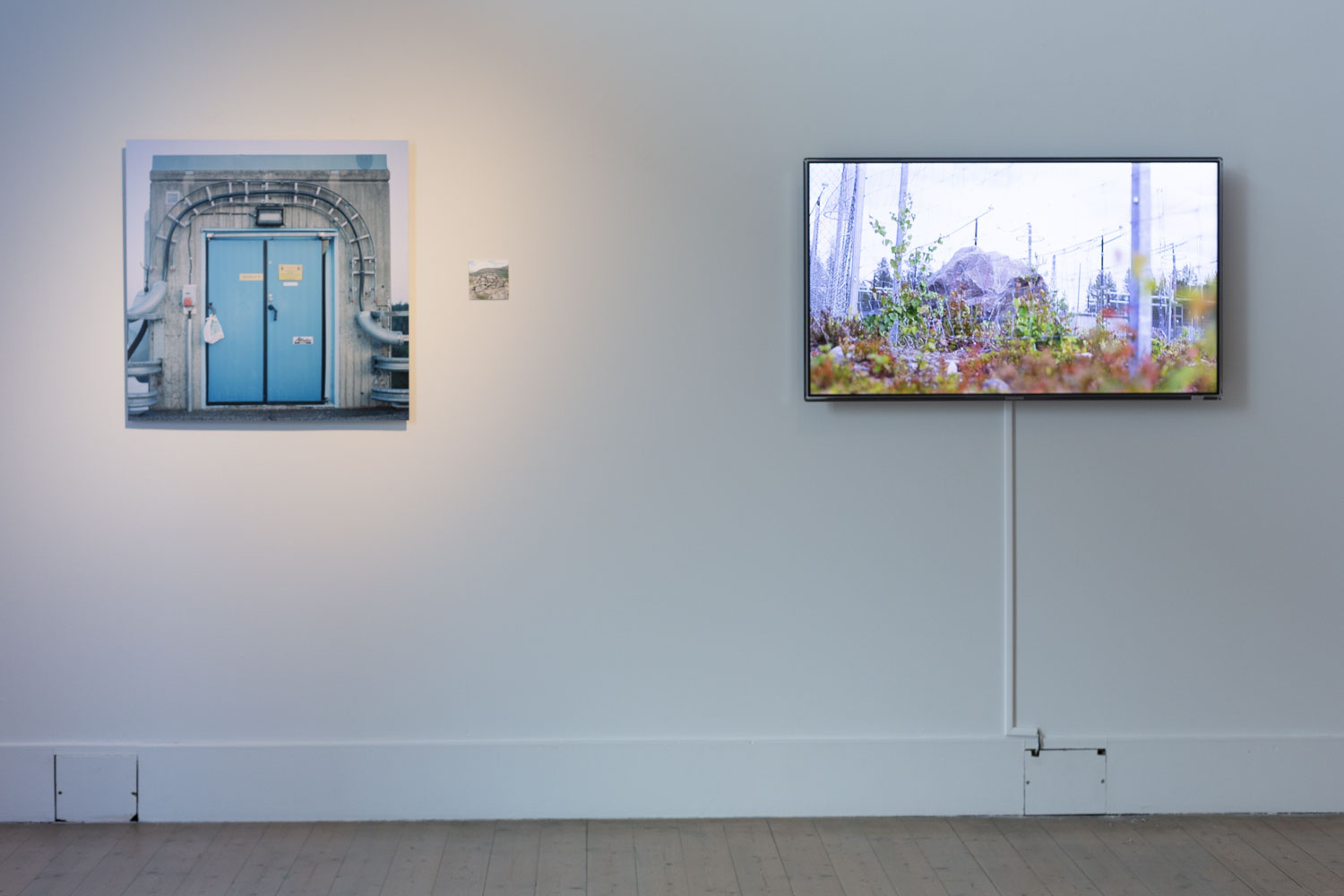


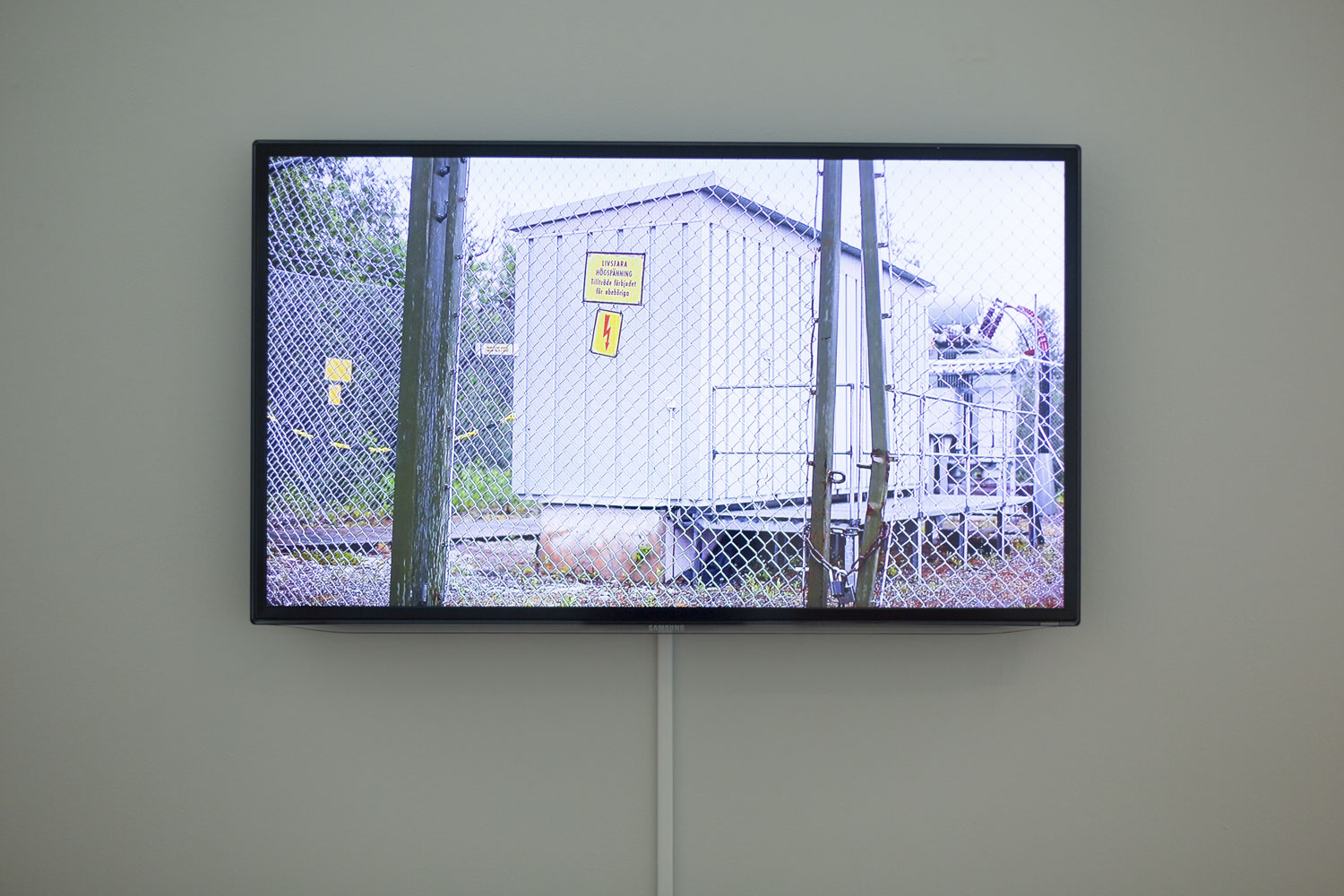
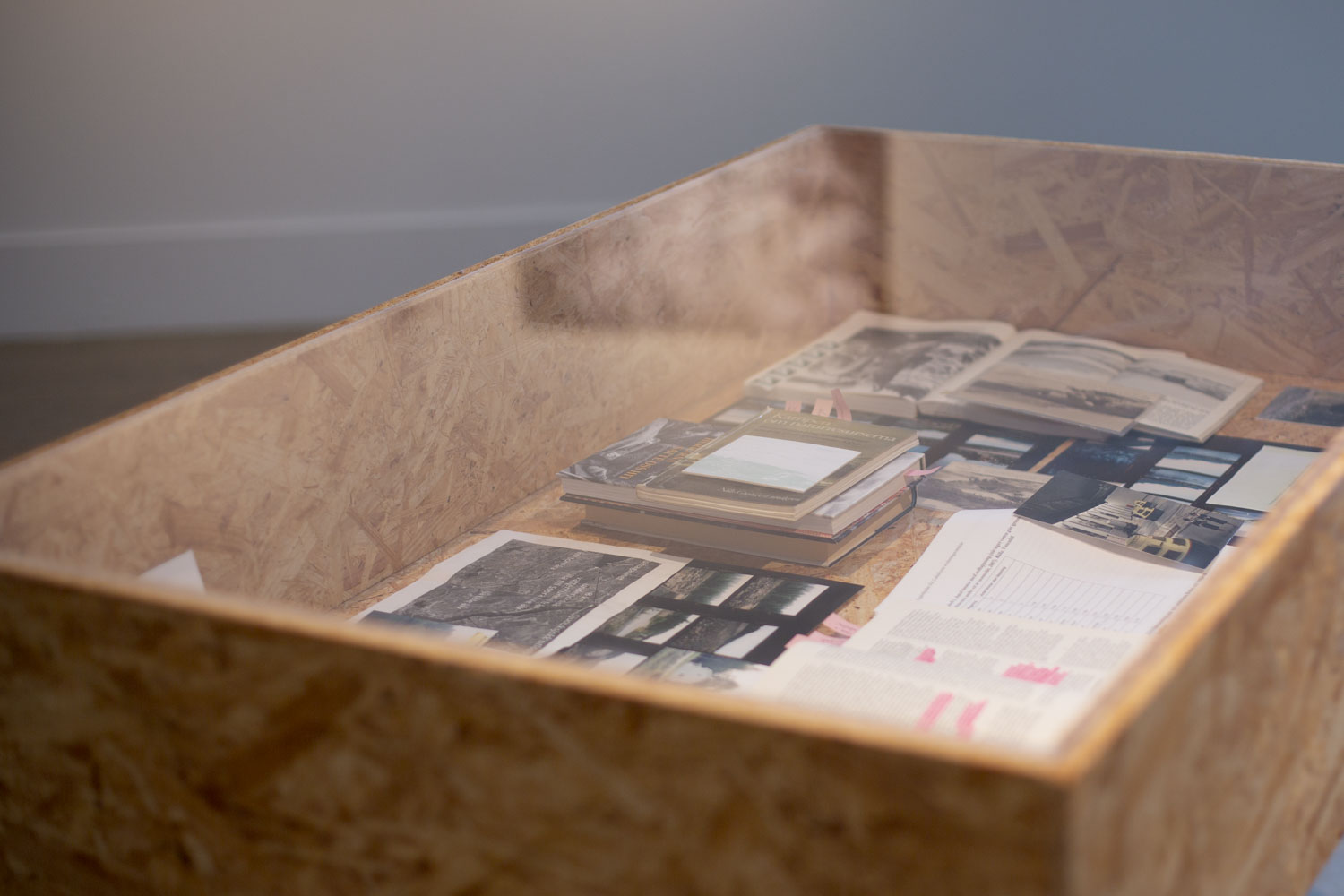
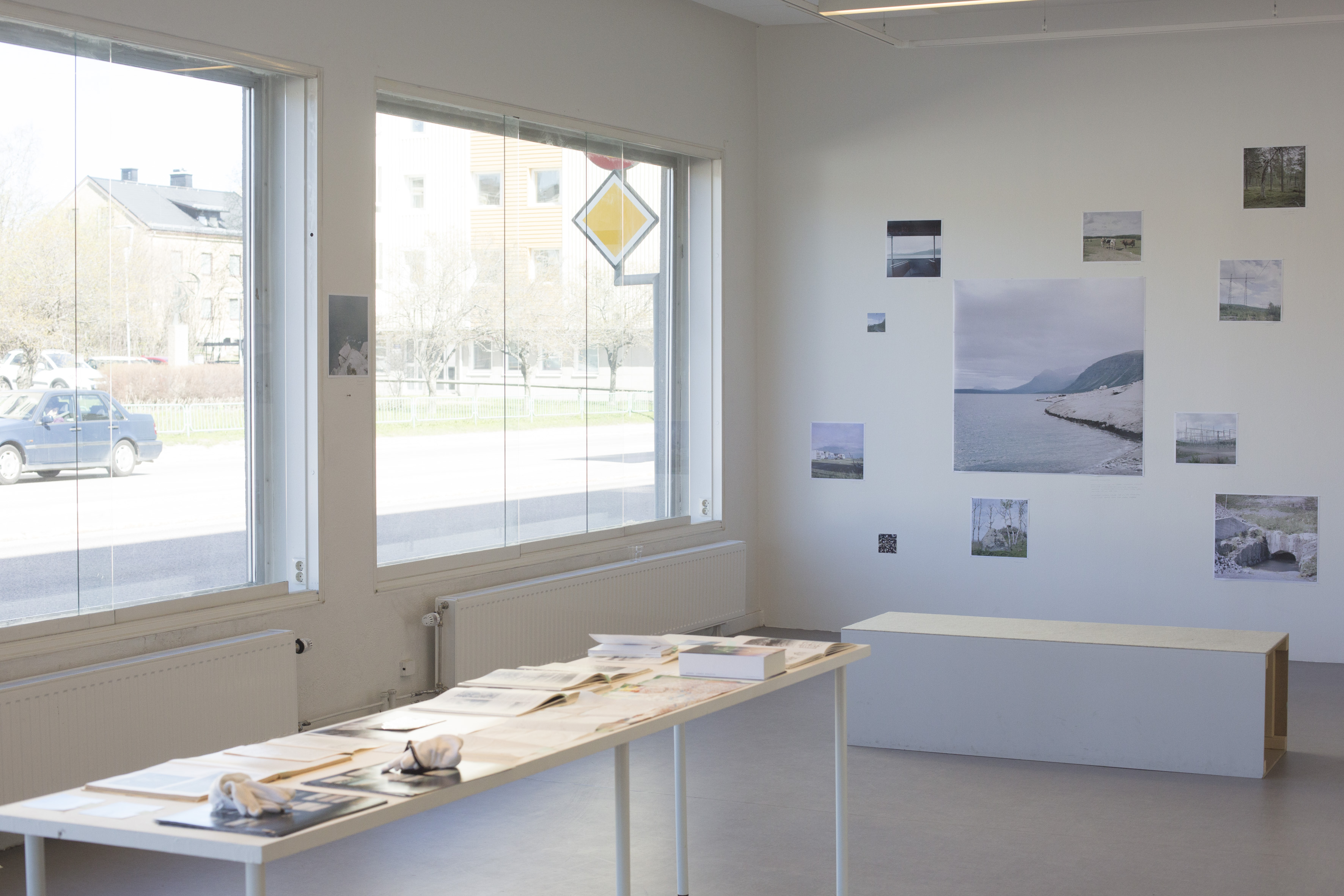
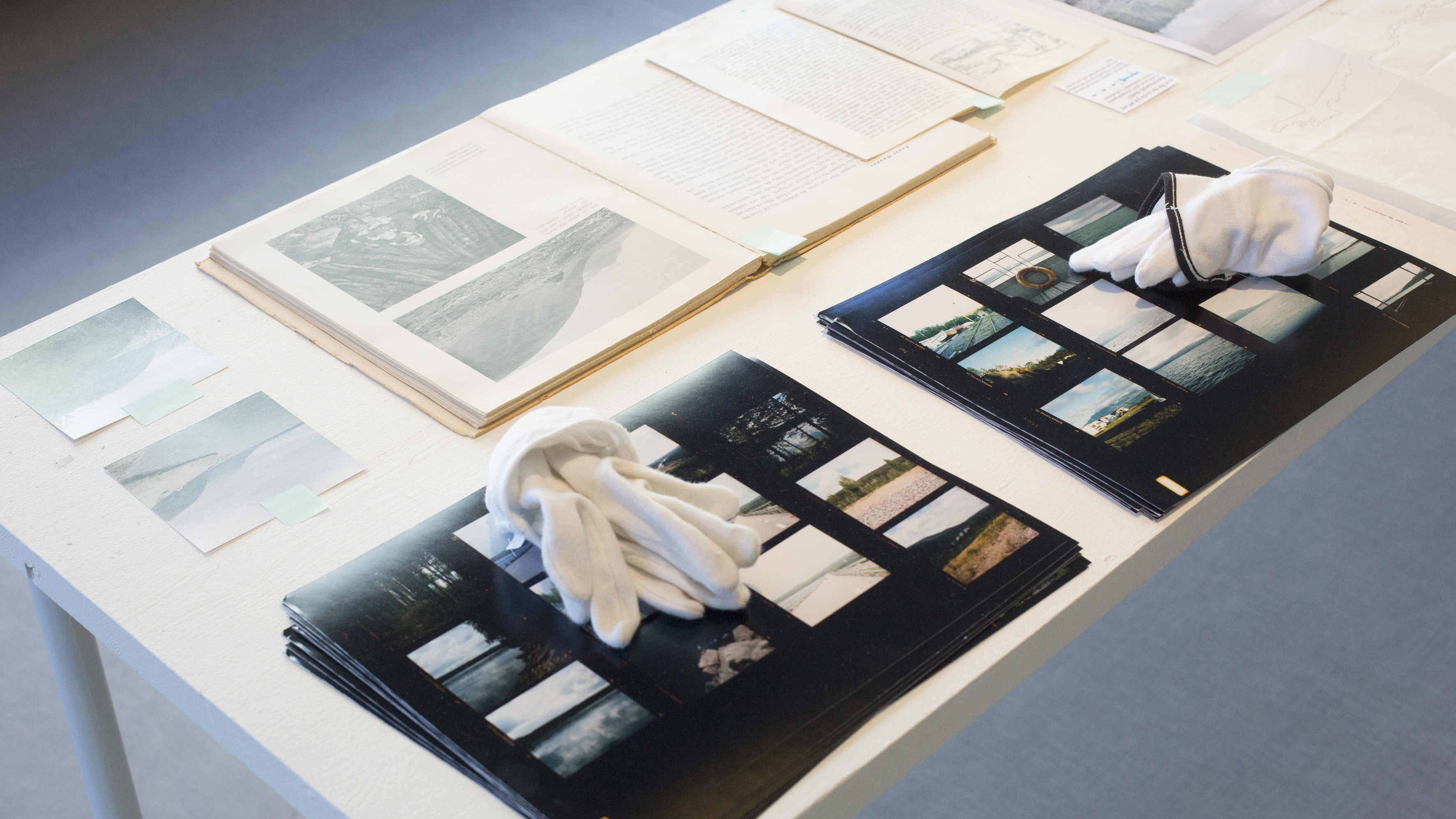
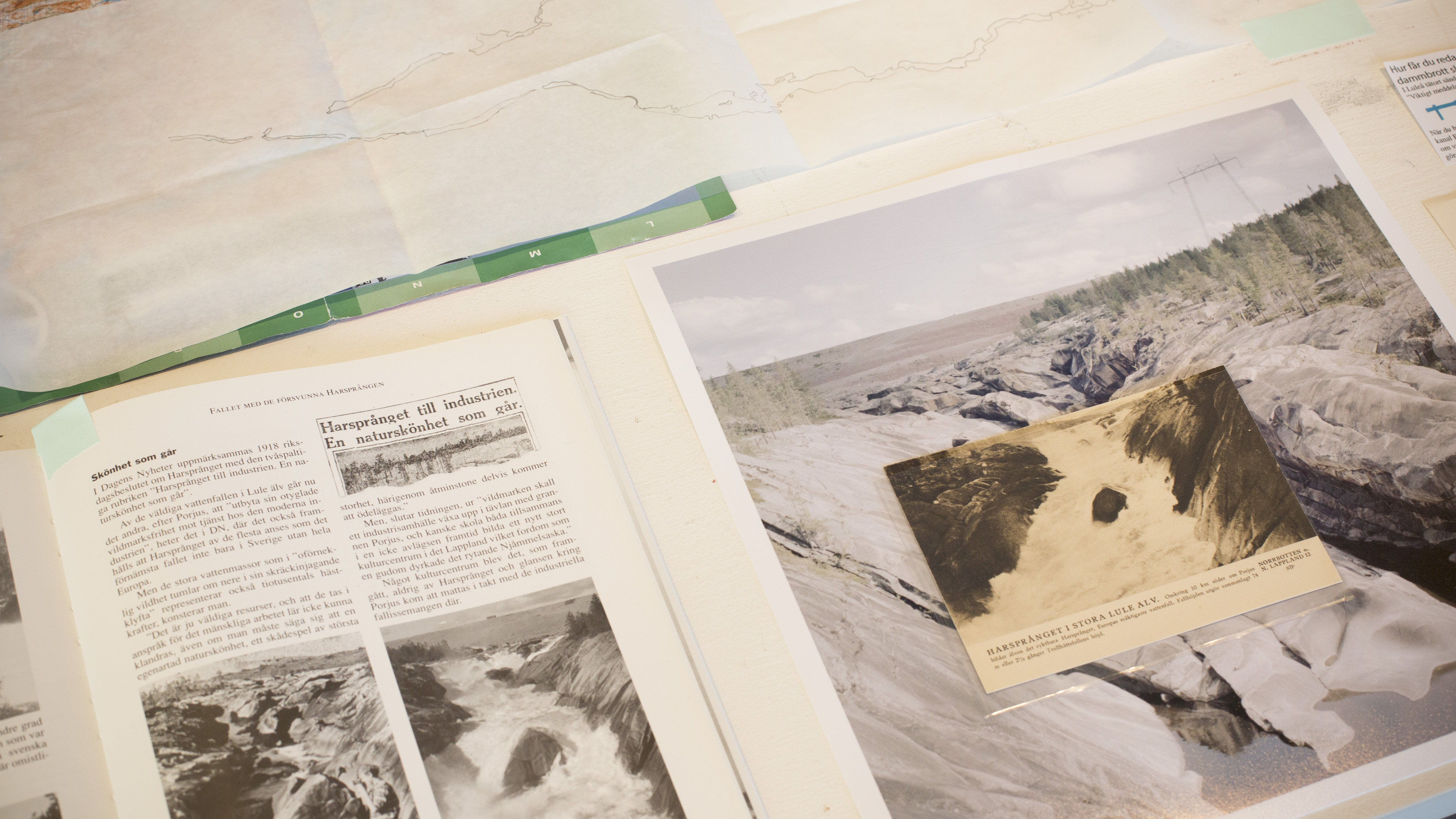


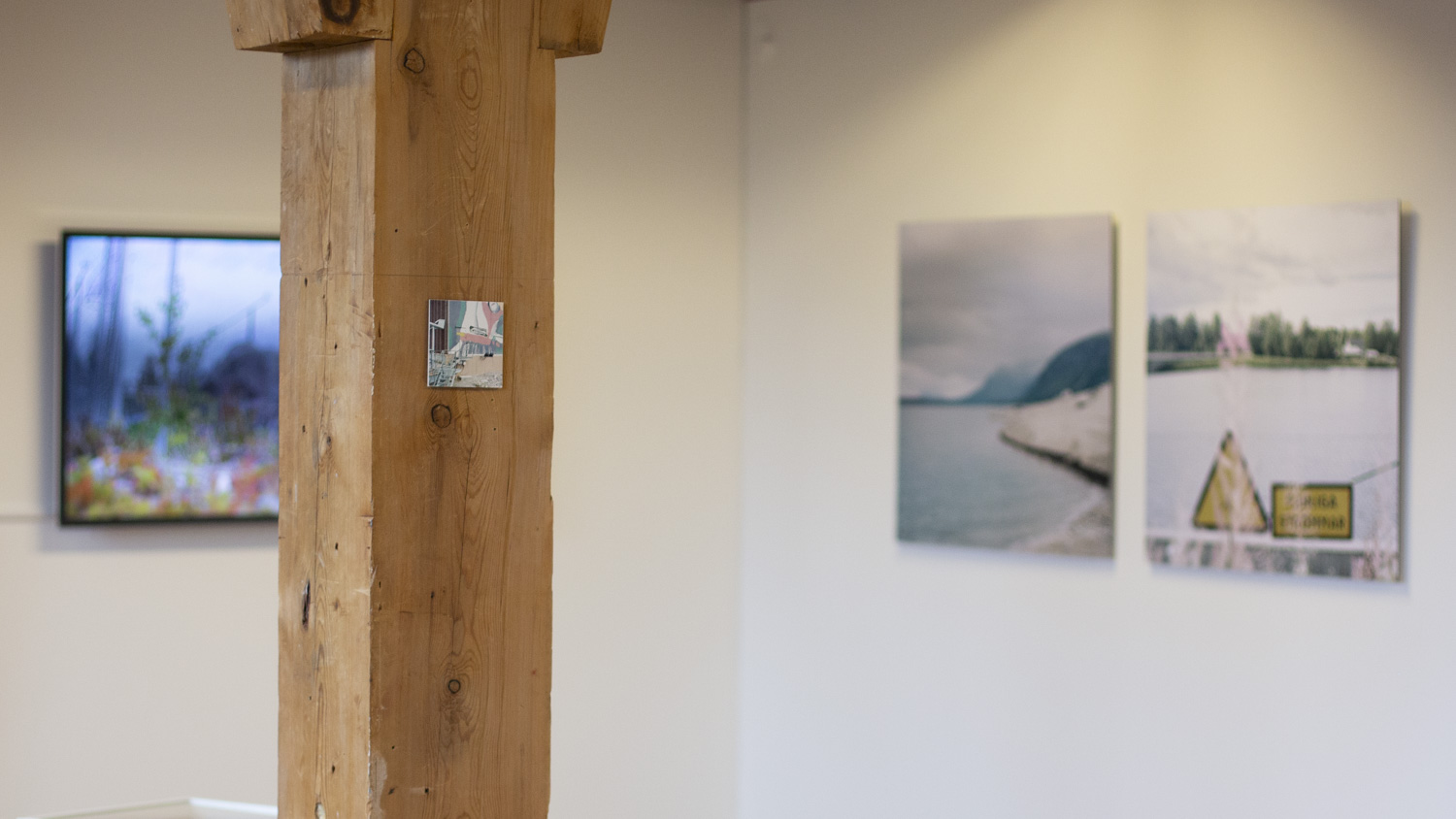

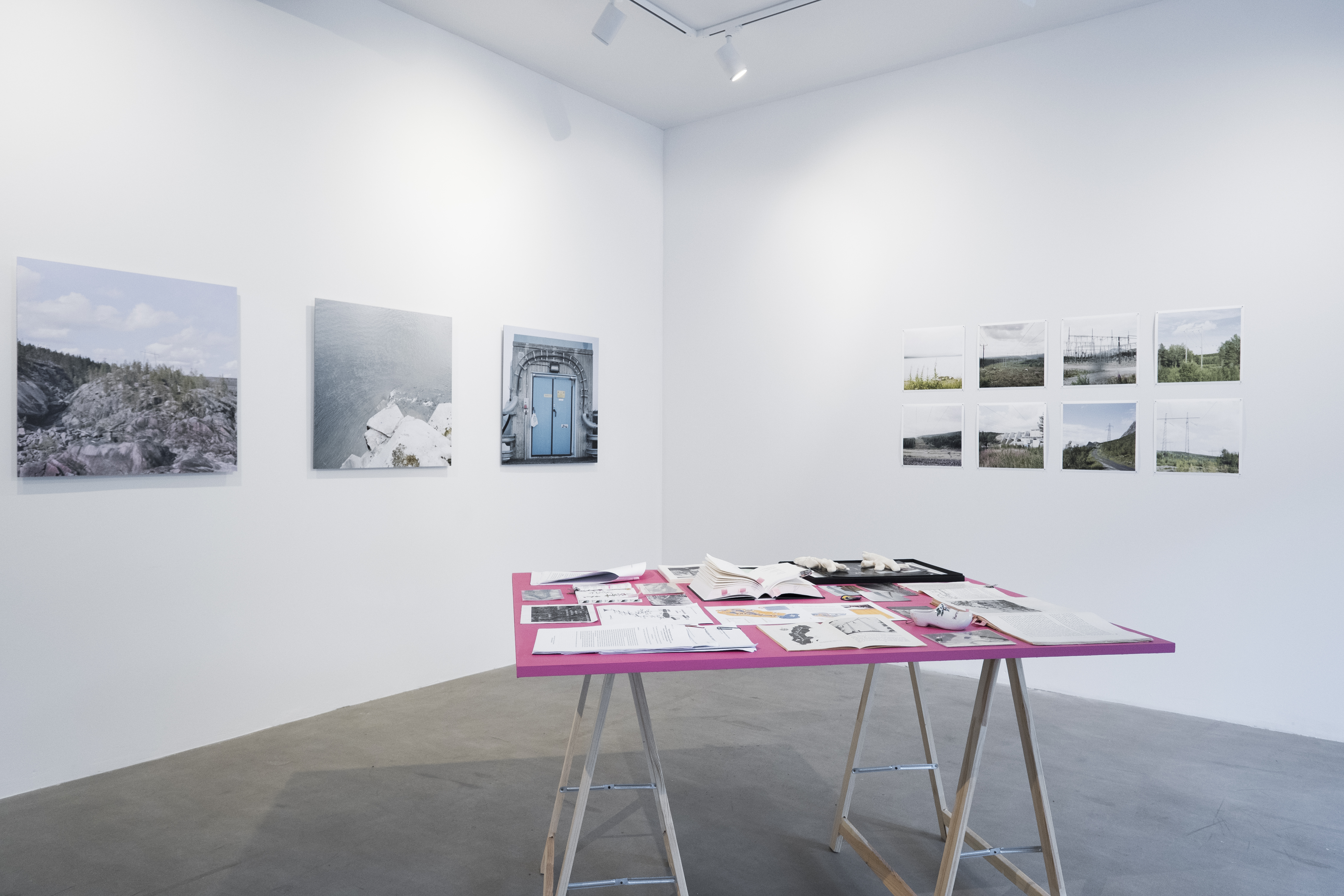
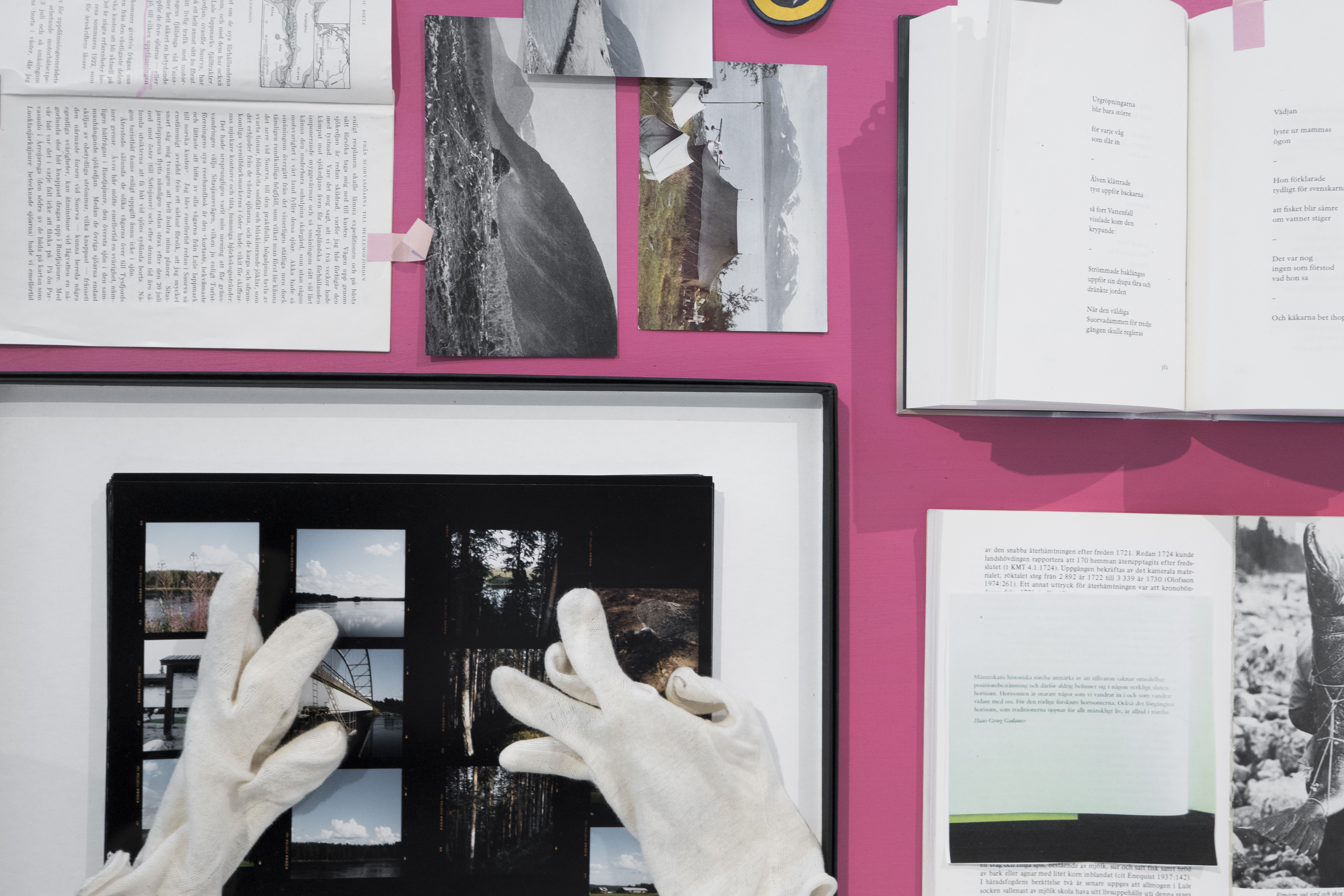


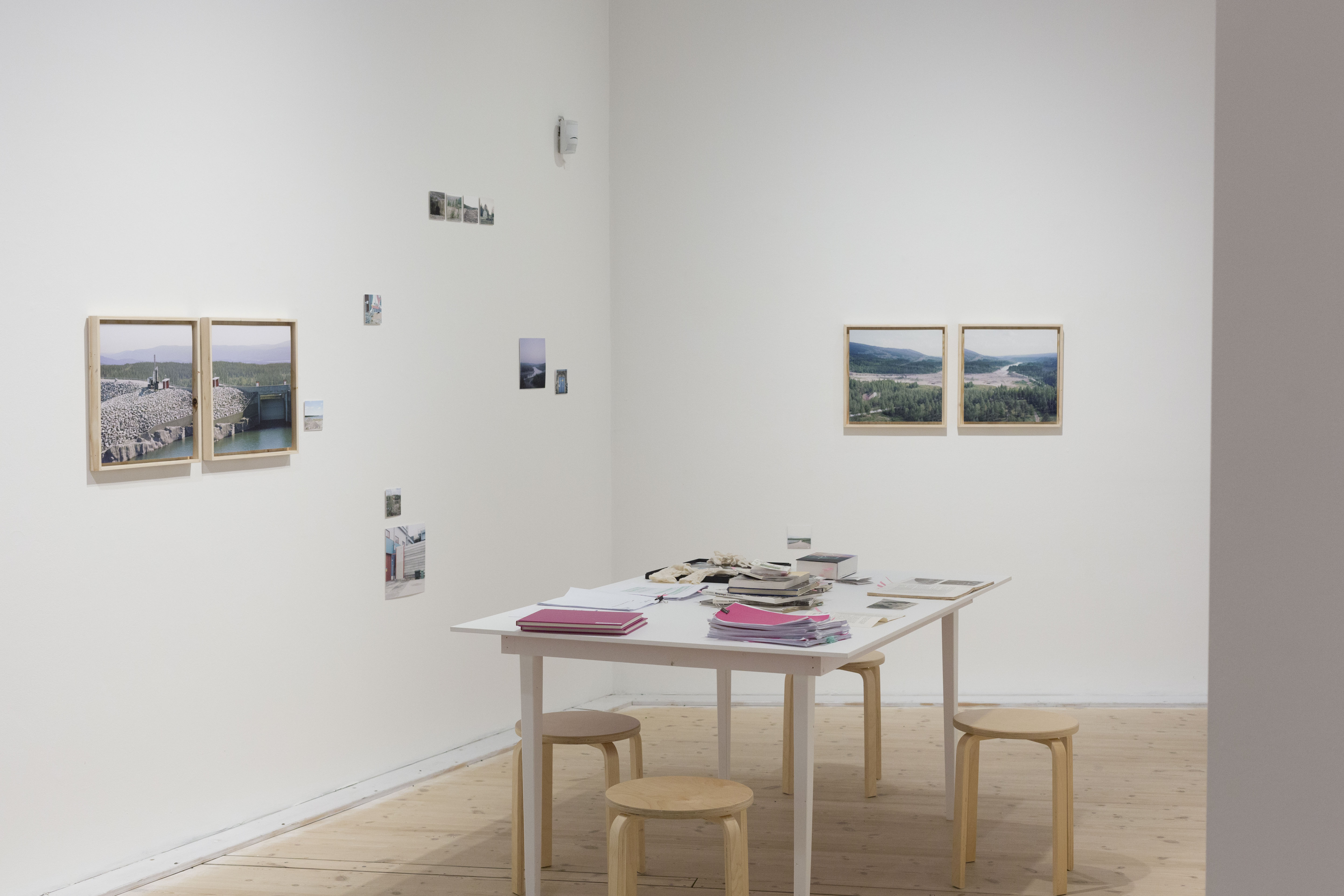
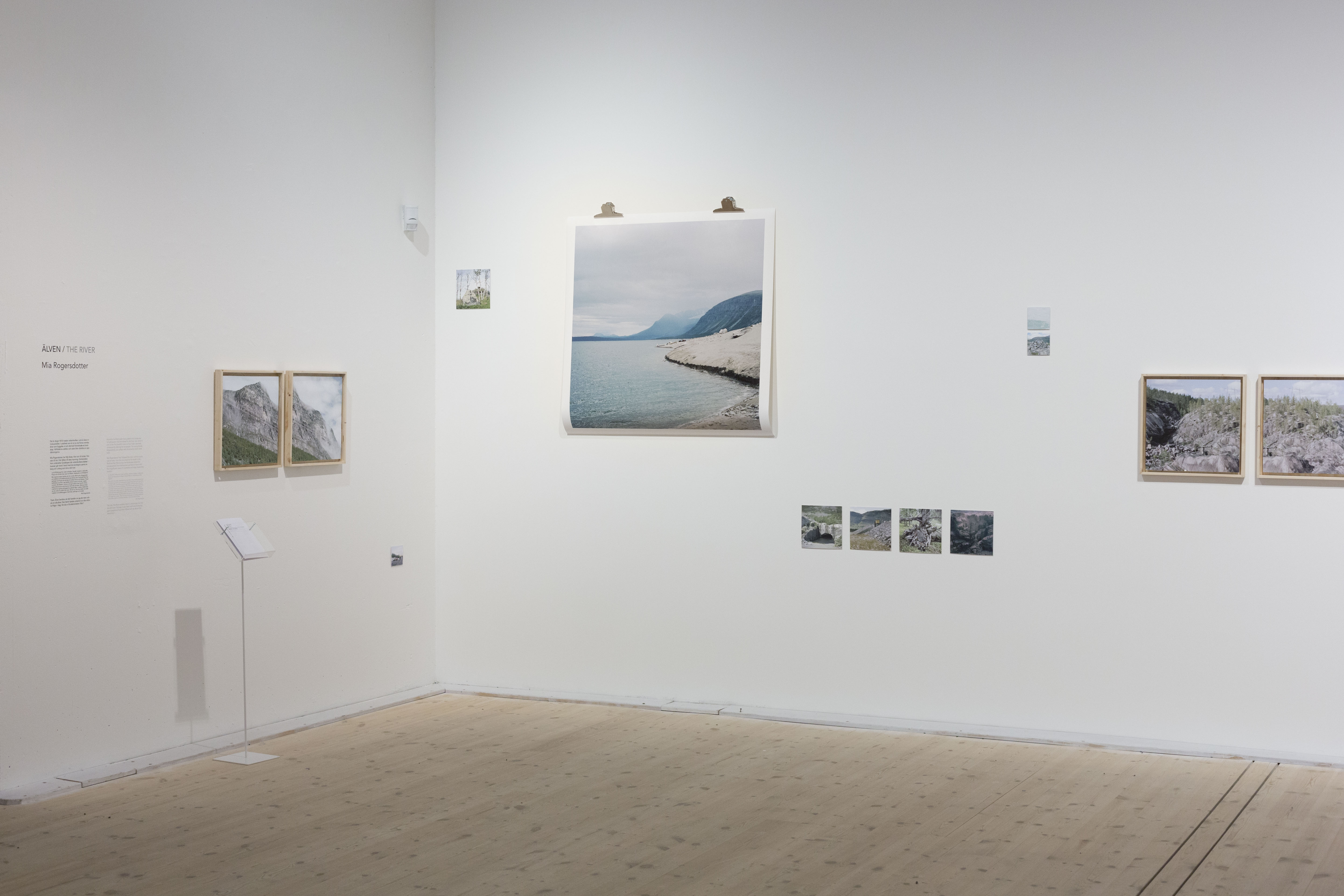

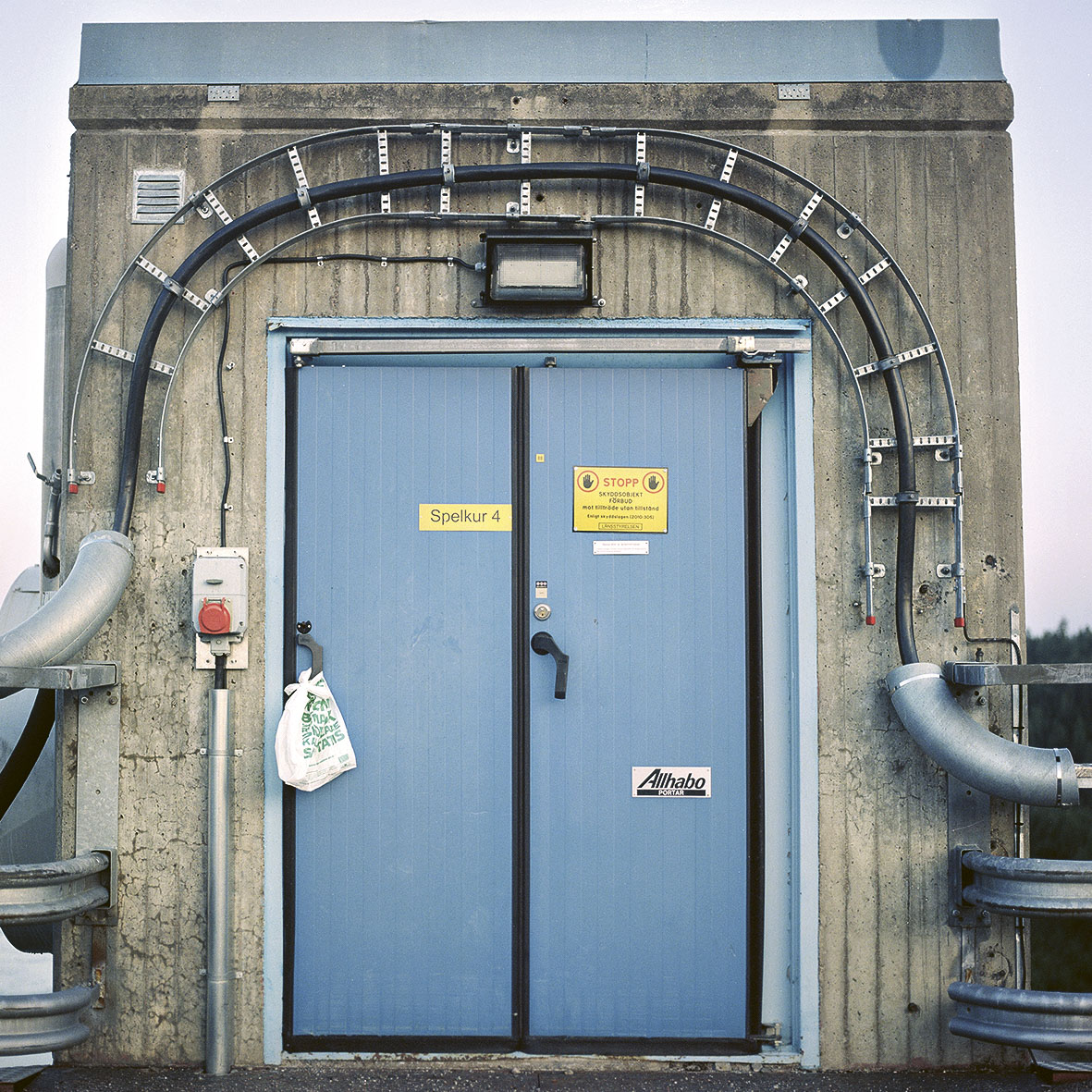
Ädno / The River / The River is an installation with photographs, archive material, video and books that all touch on and examine the Lule River. In 2017, I began working and reflecting on the river that I grew up next to. Since the beginning of the 20th century, the river valley has undergone a transformation from having Europe's most dramatic rapids and waterfalls to becoming a tranquil industrial landscape. The work with the river was to become a photo book where my journey along the river valley, visits to the 15 power stations, would be the guidelines for the photographic essay that would become the content of the book. It has since become an exhibition and has been shown in several places, both nationally in Sweden and abroad.
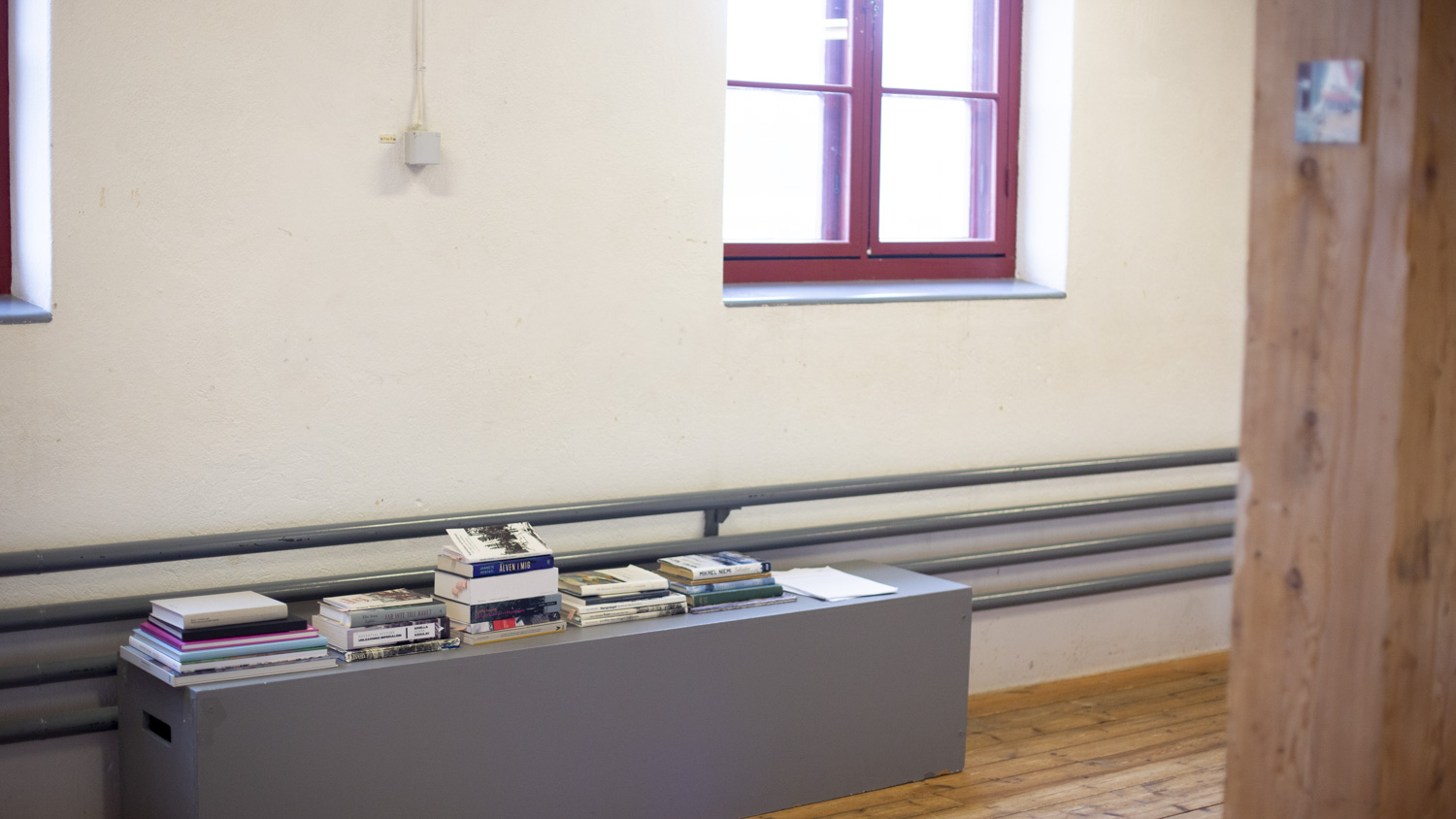
In the photographs and archival materials, we encounter power lines and switchgear placed between primeval forest, still water, rocks and mountains. We see no people, only traces of them, the landscapes are the focus. The photographs are accompanied by parts of her research material, which in their own narrative create a kind of caption for the photographs and the video on the wall. On a postcard you can read about which fish the sender in Porjus fished in the river in 1946, this is mixed with brochures from Vattenfall and Ernst Manker's powerful book from Akkajaure and Stora Sjöfallet, which was printed in 1941. Visitors are welcome to browse through books on the tables.
As a quiet reminder of the river's now most important mission, the monotonous sound that leaks out from the video in a TV on the wall - an electric humming from a switchboard near the Letsi power station.